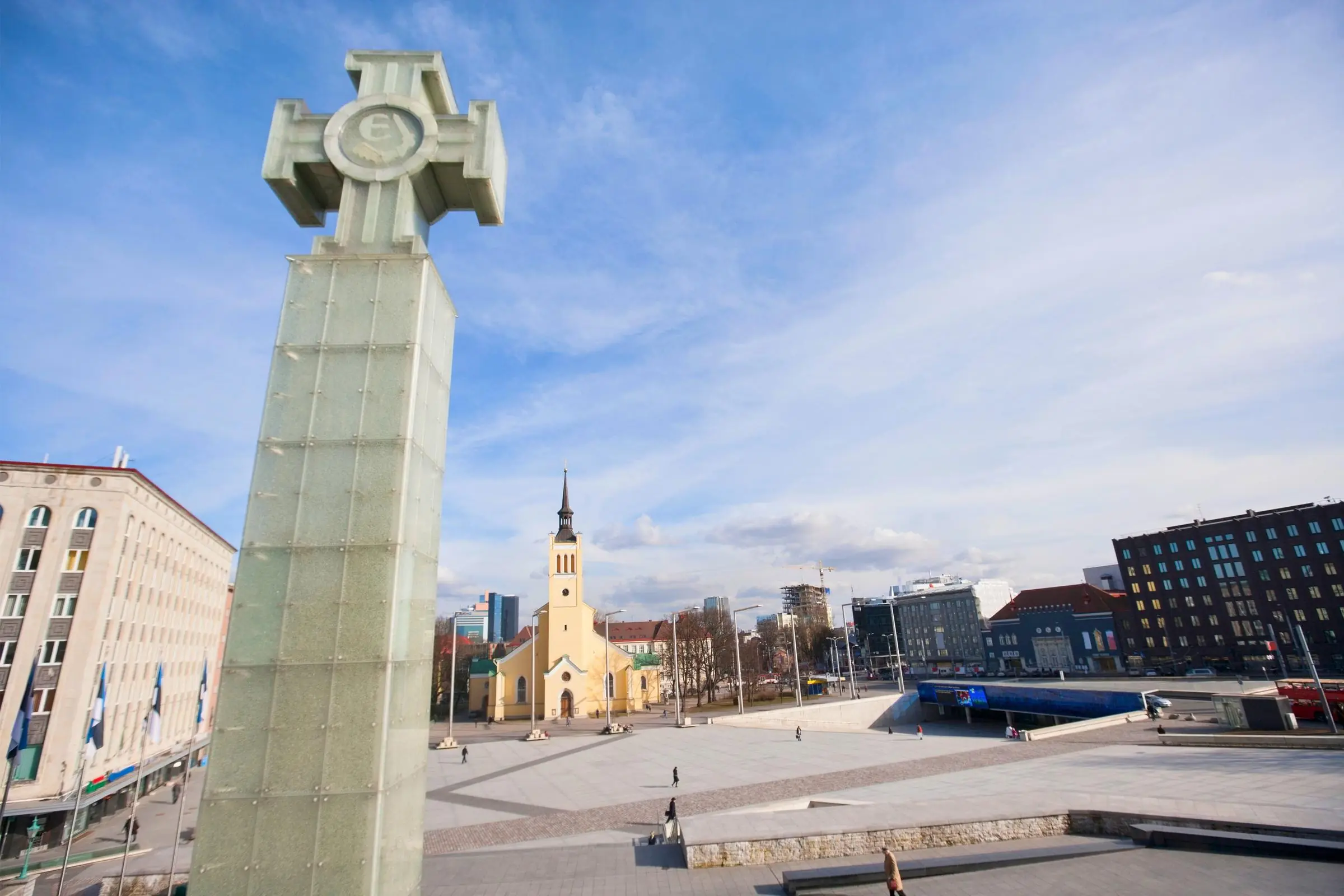
Freedom Square (Vabaduse väljak) is the architectural and civic anchor of modern Tallinn. For decades, this massive space at the edge of the medieval center was relegated to a glorified parking lot. Following a massive redesign in 2009, it was transformed into a sweeping pedestrian plaza that physically and symbolically bridges Estonia’s complex history with its forward-looking present.
Today, it is a place where 16th-century ruins sit beneath 21st-century glass, where national celebrations take place, and where thousands of locals cross paths daily. Whether you are using it as a starting point for a Guided Old Town Historical Walking Tour or simply catching a tram, understanding the layers of this square adds significant context to your visit.
This guide breaks down the square’s five defining structural landmarks, offers practical advice on navigating its transit connections, and helps you figure out how to fit it into your itinerary.
Who is this for?
Because Freedom Square is an open public space, it caters to everyone, but how you use it depends on your travel style:
- The Time-Poor Traveler: If you only have a weekend in Tallinn, use Freedom Square as your primary orientation point. It sits exactly between the modern commercial district and the Old Town neighborhood. You can snap a photo of the Victory Column, grab a coffee, and walk up the stairs to Toompea Castle in under 15 minutes.
- The Budget Traveler: The square is entirely free to explore. It offers free public Wi-Fi, plenty of seating on the wide steps beneath the column, and free access to the subterranean art galleries.
- Families with Children: The plaza is a massive, car-free zone, making it a safe place for kids to burn off energy. The subterranean level provides clean public restrooms, cafes, and shelter if the Baltic weather suddenly turns rainy.
The Wind Tunnel Effect: Because the square is a wide, open expanse situated at the foot of Toompea Hill, it frequently acts as a wind tunnel. Even on sunny days, the breeze here can be sharp. Bring an extra layer if you plan to sit on the steps for a while.
Deep Dive: 5 Structural Landmarks of Freedom Square
The 2009 redesign of the square was a masterclass in urban layering. Rather than just paving over the space, architects created a multi-level environment. Here are the five key structural elements you should look out for.
1. The War of Independence Victory Column
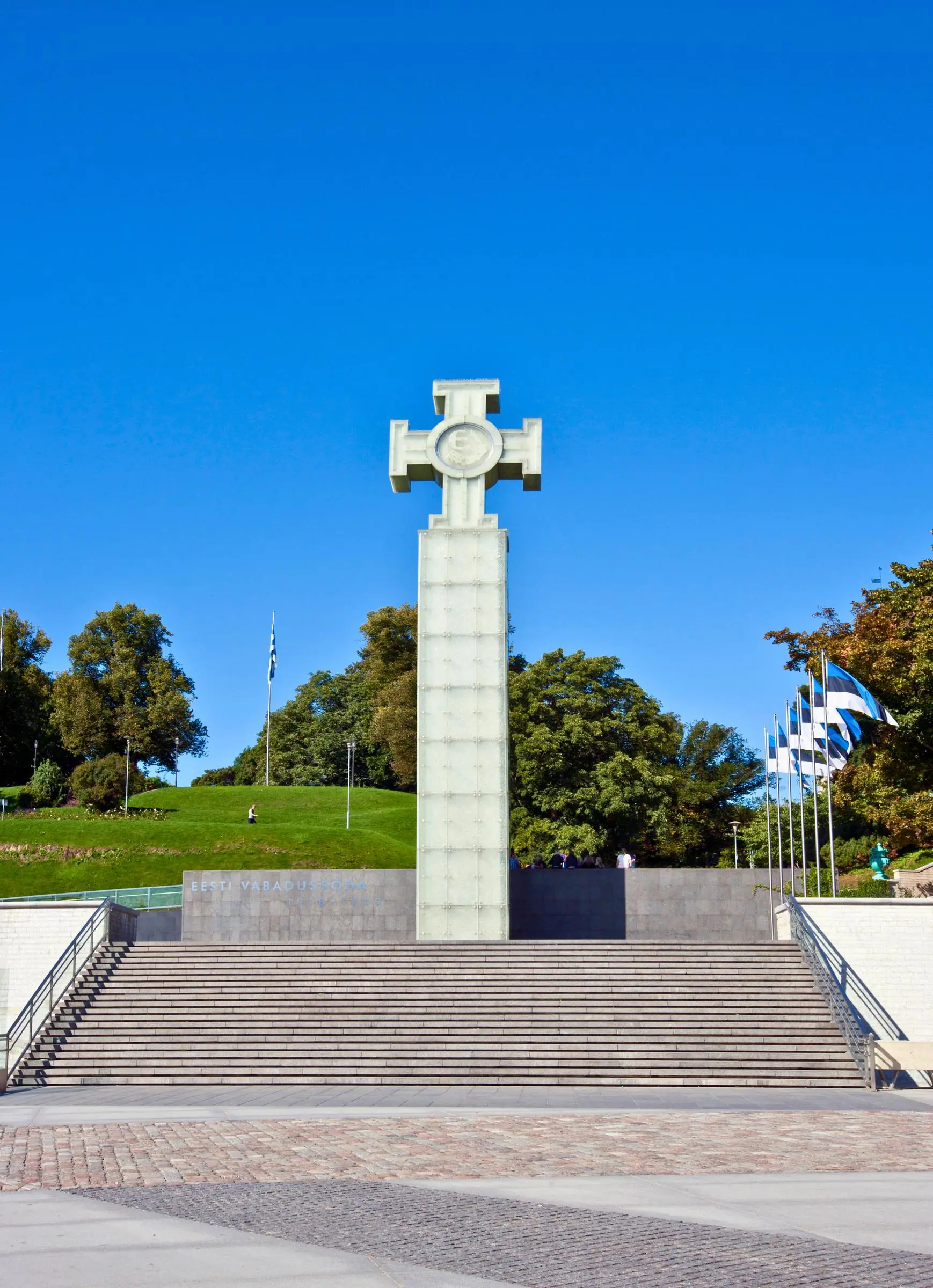
Dominating the western edge of the square, the War of Independence Victory Column (Vabadussõja võidusammas) is the plaza’s most recognizable and debated feature. Unveiled in 2009, it commemorates the Estonian War of Independence (1918–1920).
The Architecture: The monument stands 23.5 meters tall and is constructed from 143 massive glass plates. The glass was manufactured in the Czech Republic and is designed to look like blocks of ice. At the top sits the Cross of Liberty, Estonia’s highest military award, featuring a sword and the letter “E” (for Eesti).
Local Tip: The column is best viewed at dusk or at night. The internal LED lighting illuminates the glass from within, giving it a striking, ethereal glow against the dark sky. If you are taking a 2-hour Best Intro Walking Tour with a Local, ask your guide about the column’s controversial early days—the complex internal lighting system faced several technical glitches in its first few years before being completely overhauled.
2. Subterranean Modern Art Galleries
Freedom Square isn’t just a surface-level attraction; it has a sprawling underground component. When the city removed the surface parking lot, they dug down, creating a subterranean level that houses a parking garage, commercial spaces, and public art galleries.
The Architecture: Access the underground level via the wide, shallow staircases or escalators integrated into the plaza’s surface. The transition is seamless, with natural light filtering down through strategic glass openings. Down here, you’ll find the Tallinn Art Hall Gallery (Tallinna Kunstihoone galerii) extension spaces, which frequently host rotating contemporary art exhibitions. The raw concrete walls contrast sharply with the polished glass and bright lighting, creating an industrial-chic aesthetic. It is a brilliant example of utilizing civic infrastructure for cultural enrichment.
3. Historic City Wall Glass Viewing Panes
During the excavation for the subterranean level in 2008, construction crews unearthed the foundations of the medieval Harju Gate and its defensive tower, dating back to the 14th and 16th centuries.
The Architecture: Rather than burying the ruins or moving them, the architects integrated them into the modern square. As you walk across the eastern side of the plaza, look down. Large, heavy-duty glass panels are embedded directly into the pavement. Beneath your feet, illuminated by soft spotlights, are the rugged stone foundations of the old city wall.
Visibility Note: In the dead of winter, temperature fluctuations can sometimes cause condensation on the underside of these glass panels, slightly obscuring the ruins. They are clearest on dry, mild days.
4. St. John’s Church (Jaani kirik) Facade
Anchoring the eastern edge of Freedom Square is St. John’s Church. Built between 1862 and 1867, it provides a stark, historical contrast to the sleek glass and concrete of the 2009 plaza redesign.
The Architecture: The church is a prime example of neo-Gothic architecture, constructed from bright yellow brick—a rarity in Tallinn, where limestone is the dominant historical building material. Its tall, pointed spire and intricate stained-glass windows reflect the morning sun beautifully. While the square around it has modernized, the church remains a steadfast reminder of the 19th-century city. It is an active parish, and if the doors are open, it is worth stepping inside to see the vaulted ceilings.
5. Open-Air Transit Connection Stations
Freedom Square is one of Tallinn’s most critical public transport hubs, and the transit stations themselves were designed to blend into the plaza’s modern aesthetic.
The Architecture: The bus and tram shelters on the southern edge of the square (along Pärnu maantee) are minimalist structures made of dark metal and clear glass. They are equipped with real-time digital arrival boards that are highly accurate. The design ensures that waiting passengers have clear sightlines across the square, preventing the transit infrastructure from visually cutting off the plaza from the rest of the city.
If you plan on using the trams and buses frequently, consider picking up the Tallinn Card. It includes unlimited use of Tallinn’s public transport network, plus free entry to over 50 museums and attractions.
Logistics: Public Transport Links
Freedom Square (Vabaduse väljak stop) is incredibly well-connected. If you are navigating the city, this is often where you will transfer.
- Trams: Lines 3, 4, and 6 stop right at the edge of the square.
- Tram 4 is the most useful for visitors, as it connects the airport directly to Freedom Square and continues on to the Balti Jaam Market and the main train station.
- Tram 3 connects the Kadriorg district to the city center.
- Buses: Dozens of city buses stop here. If you are heading to the Seaplane Harbour or the Kumu Art Museum, you can easily catch a connecting bus from this hub.
- Tickets: You can tap your contactless credit/debit card on the orange validators at the front of any tram or bus to buy a single ticket (currently €1.50). Alternatively, use a QR ticket via the local transit app or a valid city pass.
For official schedules and route planning, use the Tallinn Transport website.
Local Tips for Visiting
- The Best Photo Spot: For a panoramic shot of the entire square, walk up the wide staircase next to the Victory Column. About halfway up the stairs leading toward Kiek in de Kök, turn around. You’ll get the column, the square, and St. John’s Church all in one frame.
- Meeting Point: If you are booking a Tallinn Tales: City Highlights Guided Walking Tour, check your meeting point carefully. “Freedom Square” is large. Most guides meet specifically at the base of the Victory Column or near the large digital clock by the street.
- Coffee Break: There is a popular cafe located right on the edge of the square, often with outdoor seating in the summer. It’s a great place to people-watch, as you’ll see everyone from politicians heading to Toompea to skateboarders practicing on the smooth concrete.
Where to Stay Near Freedom Square
Staying near Freedom Square is arguably the most strategic choice you can make in Tallinn. You are steps away from the medieval Old Town, but you don’t have to drag your luggage over cobblestones, and you have immediate access to the tram to the airport.
Use the map below to find accommodations right on the edge of the square or along Pärnu maantee.
Suggested Itinerary: Starting at the Square
If you want to use Freedom Square as the launchpad for your day, here is a quick walking route:
From the Square to the Sky
⏱️ Total: 2 hExplore the Square
Start by viewing the glass panels of the Victory Column and looking down at the Harju Gate ruins through the pavement glass.
Climb to Toompea
Take the stairs next to the Victory Column up the hill. This path leads you directly to the upper town, passing the Maiden’s Tower.
Alexander Nevsky Cathedral
Walk to the Alexander Nevsky Cathedral and admire its onion domes, located just a few minutes from the top of the stairs.
Viewing Platforms
Finish your morning by walking to the Kohtuotsa or Patkuli viewing platforms for sweeping views over the lower town you just left behind.
Keep Planning: If you want to explore more of the city’s modern side after viewing the square, check out our guide to the Rotermann Quarter, located just a 10-minute walk away.
Frequently Asked Questions
Is Freedom Square free to visit?
Yes, Freedom Square is a public civic plaza and is completely free to walk around, including the subterranean walkways and the viewing areas for the historic ruins.
How do I get from the airport to Freedom Square?
The easiest way is to take Tram No. 4 directly from the airport terminal. It takes about 20 minutes and drops you off right at the ‘Vabaduse väljak’ stop on the edge of the square.
Are there public toilets at Freedom Square?
Yes, there are clean, paid public toilets located in the subterranean level beneath the square. You can access them via the stairs or escalators.
What is the glass cross monument?
It is the War of Independence Victory Column, unveiled in 2009. It commemorates the Estonians who fought and died in the 1918–1920 war against Soviet Russia to secure the country’s independence.
Can I park my car at Freedom Square?
Yes, there is a large, paid underground parking garage located directly beneath the square. It is highly convenient but can be expensive for long-term parking compared to lots further out of the city center.
Is the square wheelchair accessible?
Yes, the surface of the square is entirely flat and paved. There are elevators and ramps providing access to the subterranean levels, making it highly accessible for wheelchairs and strollers.