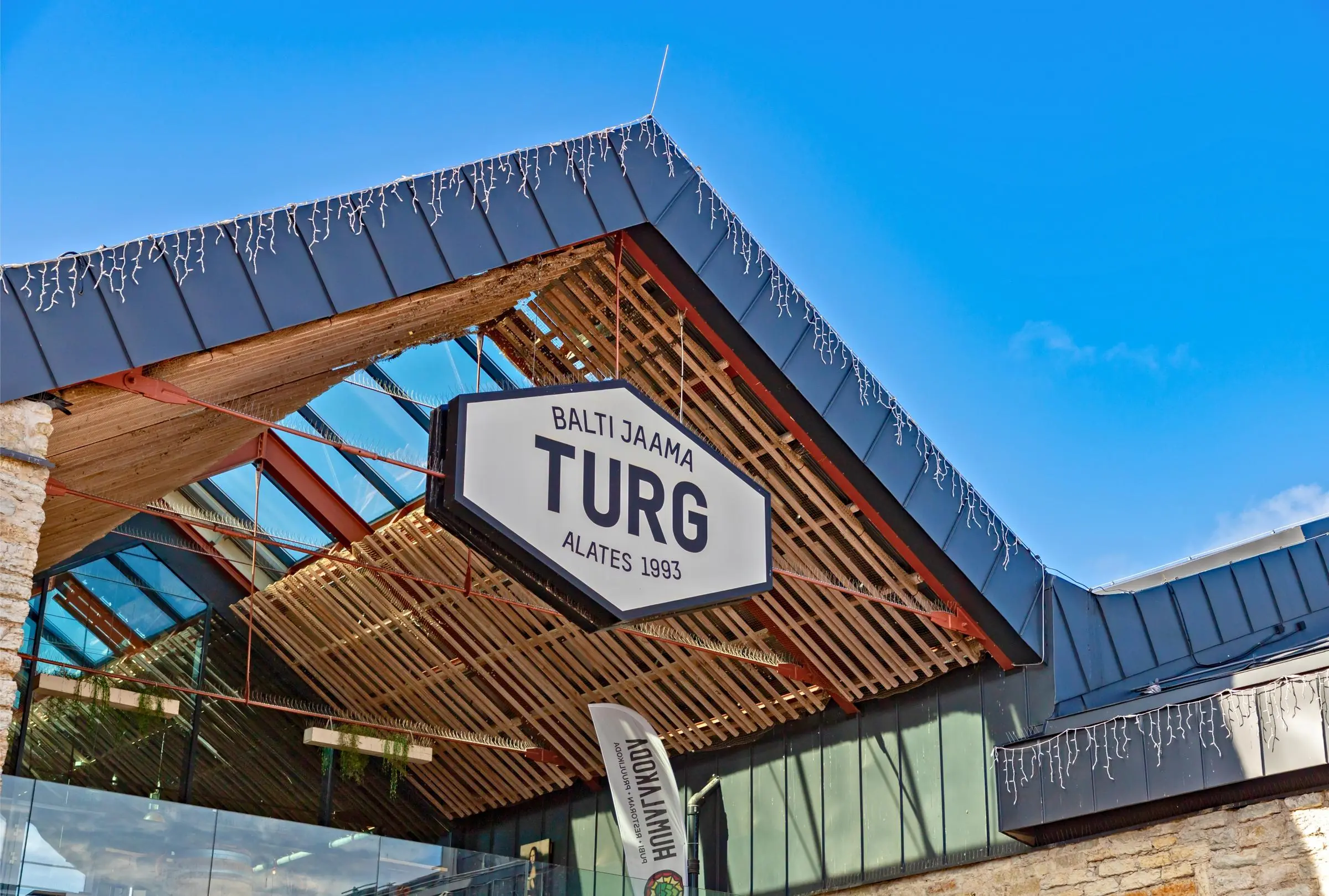
Right behind Tallinn’s main railway station sits a building with a jagged, sawtooth roofline that perfectly bridges the city’s past and present. Balti Jaam Market (Balti Jaama Turg) was completely overhauled in 2017. What used to be a chaotic, slightly gritty collection of outdoor kiosks has been transformed into a bright, three-story complex housing nearly 300 merchants.
Today, it is the undisputed center of daily life in the Kalamaja neighborhood. You will find local grandmothers inspecting the firmness of summer tomatoes right next to tech workers grabbing vegan bao buns for lunch.
Because the market is massive and densely packed, it helps to have a game plan. Here is how to navigate the five main sections of the complex, what to eat, and how to find genuine vintage goods without getting overwhelmed.
Who is this for?
A quick note on timing: The market is open daily, but the atmosphere changes depending on when you visit. Weekday mornings are quiet and practical (best for grocery shopping), while weekend afternoons are bustling, noisy, and highly social.
- For Budget Travelers: This is one of the most reliable places in Tallinn to get a filling, high-quality meal for under €10. Skip the sit-down restaurants in the Old Town and head straight for the ground floor street food corridor.
- For Families: The market is highly stroller-friendly, with wide aisles and large elevators connecting all three floors. There is a dedicated children’s play area on the upper floor near the antique section, making it easy to take turns browsing while the kids burn off energy.
- For the Time-Poor: If you only have 30 minutes before catching a train, bypass the upper and lower floors entirely. Walk straight through the open-air produce terrace, grab a pastry from a ground-floor bakery, and exit toward Telliskivi.
Deep-Dive: The 5 Market Highlights
1. The Open-Air Fruit and Berry Terraces
Before you even step inside the main building, you will walk through the covered outdoor terraces. This is the seasonal heartbeat of the market.
Depending on the month, the colors and smells here shift dramatically. In late June and July, the stalls are overflowing with wild blueberries, cloudberries, and tiny, intensely sweet Estonian strawberries. By September, the tables are piled high with golden chanterelle mushrooms and root vegetables.
Local Tip: You don’t need to buy in bulk. Most vendors sell small cardboard punnets or paper cones of berries specifically meant for snacking while you walk. Bring a few euros in coins, as some of the older, independent farmers here prefer cash over card.
2. Artisan Local Bakery Centers (Ground Floor)
As you move from the outdoor terrace into the main ground floor, the smell of roasted coffee and baking dough takes over. Estonia has a deep, cultural reverence for bread—specifically dark, dense rye bread (leib).
Look for Muhu Pagarid, a bakery that originated on the Estonian island of Muhu. Their black bread, often served warm and crusted with seeds, is a staple. Buy a half-loaf to take back to your accommodation.
If you have a sweet tooth, scan the pastry counters for seasonal treats. In February, you will find vastlakukkel (cardamom buns hollowed out and filled with marzipan and mounds of whipped cream). Year-round, you can rely on excellent cinnamon buns (kaneelirull) and curd pockets (kohupiimatasku).
3. The Street Food Corridor (Ground Floor)
The central spine of the ground floor is dedicated to street food. This area gets incredibly busy between 12:00 PM and 2:00 PM on weekdays as locals pour in for lunch.
The variety here is excellent. You can find everything from authentic Uzbek plov and Georgian khachapuri to gourmet vegan burgers and Taiwanese bao.
- Pelmeni: Look for the stalls serving traditional Eastern European dumplings. You can get them boiled and served in broth, or pan-fried with a heavy dollop of sour cream and dill.
- Craft Beer: Several small bars operate right in the middle of the food court. You can grab a local Estonian IPA, take a seat at the communal wooden tables, and eat food purchased from any of the surrounding stalls.
If you want to dive deeper into the local culinary scene, consider booking an Estonian Food, Drinks and History Tour that explores the flavors of this exact neighborhood.
If you visit during the peak lunch hour (12:00 PM - 1:30 PM), seating in the street food corridor is scarce. Grab your food to go and head out the back doors toward Telliskivi, where there are outdoor benches.
4. Fresh Fish and Meat Markets (Lower Ground Floor)
Take the escalator down to the underground level to find the traditional meat and fish halls. This area feels the most like the “old” Balti Jaam market. It is bright, clinical, and fascinating.
The Fish Hall: Estonia’s Baltic coastline means fish is a dietary staple. The counters here are lined with smoked sprats (kilu), herring, eel, and massive slabs of salmon. If you want to try a classic local snack, buy a small container of spiced sprats. Locals eat them layered over buttered black bread with a slice of boiled egg.
The Meat Hall: Alongside standard cuts of pork and beef, you will find a lot of game meat. Look out for wild boar sausages and cured elk meat, which make excellent, vacuum-sealed edible souvenirs to take home.
5. Soviet Antique and Vintage Lanes (Upper Floor)
The entire top floor is a treasure hunt. Half of the space is dedicated to modern Estonian design and clothing boutiques, but the other half is a sprawling labyrinth of vintage shops and antique dealers.
This is the place to find relics of Estonia’s 20th-century history. The glass cabinets are stuffed with Soviet-era cameras (like old FEDs and Zenits), Olympic Mishka pins from the 1980 Moscow games (the sailing regatta was held in Tallinn), amber jewelry, and heavy crystal glassware.
Further back, you will find racks of second-hand clothing, vintage military surplus, and crates of old vinyl records.
Haggling Etiquette: Prices are generally marked and fixed, especially for clothing. However, if you are buying multiple items from an antique dealer (like a handful of pins or a few pieces of glassware), it is perfectly acceptable to politely ask for a slight discount.
Suggested 2-Hour Market Itinerary
If you want to see the best of the market without backtracking, follow this route:
Balti Jaam Walkthrough
⏱️ Total: 2 hThe Outdoor Terraces
Start at the front of the market (facing the train station). Walk through the outdoor fruit and vegetable stalls. Buy a small snack of fresh berries.
The Vintage Hunt
Head immediately up the escalators to the top floor. Spend half an hour digging through the Soviet antique stalls and vintage clothing racks before it gets too crowded.
The Meat and Fish Halls
Take the elevator all the way down to the underground level (-1). Walk through the fish and meat counters to see the traditional side of Estonian grocery shopping.
Street Food Lunch
Ride the escalator back up to the ground floor. Walk down the central street food corridor, pick a stall for lunch, and grab a seat at the communal tables. Finish with a coffee from one of the artisan roasters.
Actionable Budget Dining Hacks
Eating at Balti Jaam is already cheaper than dining in the Old Town, but you can stretch your euros even further with these tips:
- Look for “Päevapakkumised” (Daily Specials): Many of the food stalls offer a daily lunch special on weekdays between 11:30 AM and 2:00 PM. These are usually hearty, home-style meals (like a pork cutlet with potatoes or a bowl of thick soup) priced between €5 and €7.
- The Supermarket Hot Counter: On the underground level, there is a large Selver supermarket. Head to their deli counter for cheap, hot, ready-to-eat meals like roasted chicken, potato wedges, and traditional salads. You pay by weight, and it is incredibly cheap.
- Share the Street Food: Portions at the street food stalls (especially the loaded fries, pizzas, and dumpling bowls) are large. If you are traveling with a partner, buy one main dish and a couple of bakery items to share.
- Free Water: Tap water in Tallinn is excellent and perfectly safe to drink. Don’t waste money on bottled water; just ask the vendors to fill your reusable bottle.
Logistics and Practical Tips
How to Get There
The market is located at Kopli 1, directly adjacent to the Balti Jaam train station.
- Walking: It is a short 10-minute walk from the Old Town. Just exit through the Town Wall Towers near Nunne street and walk under the train tracks.
- Tram: Trams 1, 2, and 5 stop right outside at the
Balti jaamstop. Read our public transport guide for ticketing details.
Payment Methods
Estonia is a highly digital society. You can pay with a contactless card or smartphone at 99% of the stalls inside the building, including the antique vendors. The only place you might need a few coins is at the seasonal outdoor farmer’s tables.
Combining Your Visit
Balti Jaam Market sits right on the border of the Telliskivi Creative City. The market’s back doors open almost directly into Telliskivi’s street art-covered alleys, making it incredibly easy to combine the two.
If you want a structured overview of the area’s history, from its industrial past to its modern revival, the Old Town and Telliskivi Walking Tour is an excellent way to connect the dots.
Where to Stay Nearby
If you love food, coffee, and independent boutiques, the area immediately surrounding the market (Kalamaja and Telliskivi) is the best place to base yourself in Tallinn. It is quieter than the Old Town but has a much better local dining scene.
Use the map below to find hotels and guesthouses within walking distance of the market:
Frequently Asked Questions
Is Balti Jaam Market open on Sundays?
Yes, the market is open seven days a week. However, hours are slightly shorter on Sundays (usually closing by 5:00 PM instead of 7:00 PM). The street food vendors sometimes stay open a bit later than the retail stalls.
Are dogs allowed inside the market?
Yes, well-behaved dogs on leashes are welcome inside the main market building, including the street food areas. You will see many locals shopping with their pets.
Is the market wheelchair and stroller accessible?
Absolutely. The 2017 renovation prioritized accessibility. There are wide, flat entrances, spacious aisles, and large public elevators connecting the underground, ground, and upper floors.
Are there public restrooms available?
Yes, there are clean, modern public restrooms located on the underground level (-1) near the supermarket, and on the upper floor near the cafes. There is usually a small fee (around €0.20 to €0.50), which can be paid by tapping a bank card on the turnstile.
How much time should I plan to spend here?
If you just want to grab a quick lunch, 45 minutes is enough. If you want to browse the Soviet antiques, explore the food halls, and sit down for a craft beer, plan for at least 1.5 to 2 hours.