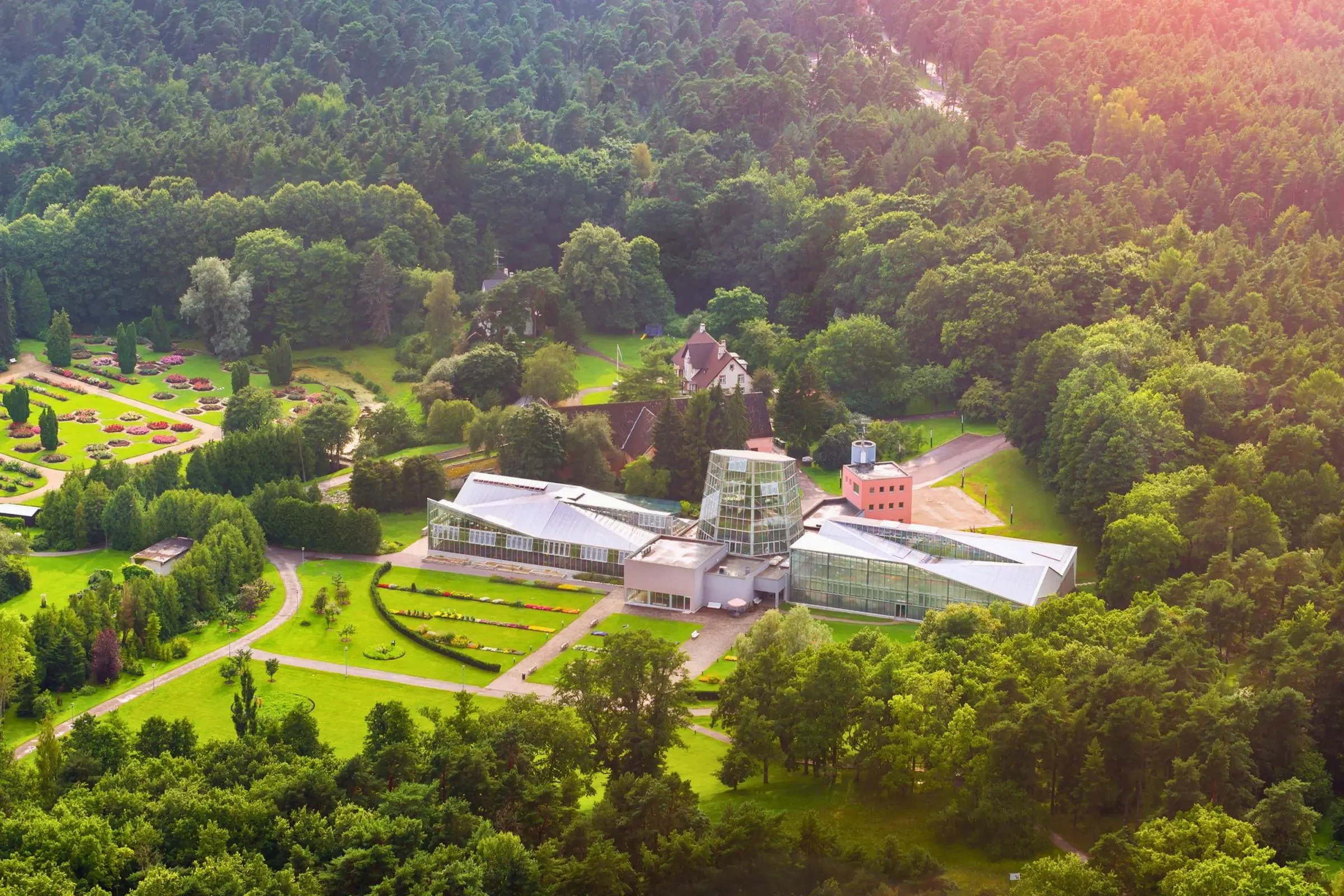
Located in the quiet, forested Pirita river valley just a short bus ride from the city center, the Tallinn Botanic Garden (Tallinna Botaanikaaed) spans 123 hectares of meticulously curated landscapes. Unlike the dense, cobblestone streets of the Old Town, this area offers wide-open skies, fresh pine-scented air, and an impressive collection of over 8,000 plant species.
Whether you are looking to escape the winter chill inside the humid, multi-story glasshouses or want to spend a summer afternoon picnicking among hundreds of blooming rose varieties, this space is a highly practical addition to any Tallinn itinerary. Because it shares a boundary with the Tallinn TV Tower, it is incredibly easy to combine both landmarks into a single half-day trip.
The Botanic Garden is located directly next to the Tallinn TV Tower. If you plan to do both, you can book a combined guided tour to save time and get expert context on both the flora and the Cold War history next door. Alternatively, entry to both is included if you purchase the Tallinn Card.
Who Should Visit (And How to Plan)
The Botanic Garden appeals to different travelers in different ways. Here is how to approach your visit based on your constraints:
- For Families: This is one of the best places in Tallinn for children to burn off energy. The outdoor paths are wide, flat, and highly stroller-friendly. Pack a lunch and utilize the designated picnic areas near the ponds. If you are traveling with kids, prioritize the outdoor arboretum and the sensory garden where touching and smelling the plants is encouraged.
- For the Time-Poor: If you only have an hour, skip the outer forest trails. Head straight into the Palm House for the dramatic indoor displays, then walk the short loop through the Rosarium just outside the glasshouse doors.
- For Budget Travelers: The outdoor grounds are expansive enough to occupy a full afternoon for a very low entry fee. If you plan on visiting multiple museums during your trip, grab the Tallinn Card, which grants you free access to the garden, the TV Tower, and covers your public transport bus fare to get here.
5 Botanical Highlights: A Deep Dive
The garden is divided into distinct zones. While it is easy to simply wander, knowing what to look for will help you structure your walk.
1. The Multi-Story Palm House and Glasshouses
The architectural centerpiece of the garden is the massive glass Palm House. Built to house subtropical and tropical plants, this multi-story structure is a wall of humidity and warmth—a welcome contrast if you are visiting Tallinn during the colder months.
The complex is split into different climate zones. The central rotunda houses towering palm trees, giant ferns, and creeping vines that reach up to the glass ceiling. Side galleries feature an extensive collection of succulents, cacti, and a dedicated orchid house that blooms brilliantly in late winter. Tip: The temperature inside is kept high. If you are visiting in winter, wear layers so you can strip down to a t-shirt while exploring the indoor collections.
2. The Rosarium (Themed Rose Gardens)
Located just behind the Palm House, the Rosarium is the garden’s summer showpiece. It features over 600 varieties of roses, carefully organized by theme, color, and historical origin. You will find everything from ancient heritage roses that bloom only once a year to modern, highly disease-resistant hybrids. The layout is geometric, with grassy walkways allowing you to get close to the beds. The peak time to visit this section is from mid-July through August, when the colors and scents are at their most intense.
3. The Sensory Garden (Scent Paths)
Designed specifically with visually impaired visitors in mind, the Garden of Senses is a highly tactile and aromatic zone. Raised garden beds bring the plants closer to hand level, making it easy to touch the textured leaves and smell the herbs. Signage here includes Braille, and the plant selection focuses on strong aromatics like lavender, mint, thyme, and various medicinal herbs. It is a fantastic, interactive area for children, as it encourages engaging with nature beyond just looking at it.
4. The Alpine Rock Garden
Sloping down toward the river, the Alpine Rock Garden mimics the harsh, rocky environments of mountainous regions. This terraced area is built with local limestone and features hardy, low-growing flora from the Alps, the Caucasus, and the Himalayas. Because alpine plants bloom early to take advantage of short mountain summers, this is one of the first areas of the outdoor garden to show color in the spring (late April to May). The winding, narrow stone paths make it feel like a miniature mountain hike.
5. The Surrounding Pine Forests and Arboretum
Beyond the manicured beds lies the arboretum and the natural Pirita pine forest. This area showcases woody plants from around the Northern Hemisphere, grouped geographically. You can walk from a “North American” forest into an “East Asian” woodland within a few minutes. The trails here are unpaved but well-maintained, offering a quiet, shaded retreat. This is where the garden blends seamlessly into the broader Pirita river valley landscape, making it a popular spot for local birdwatchers and nature photographers.
Keep Planning: If you enjoy the coastal pine forests here, consider taking a short bus ride further down the coast to explore the Pirita Seaside, which offers sandy beaches and marina views.
Seasonal Blooms Calendar
Timing your visit dictates what you will see. The garden changes drastically from month to month.
| Season | Months | Botanical Highlights | The Vibe |
|---|---|---|---|
| Spring | May – Early June | Tulips, daffodils, crocuses, and the Alpine rock garden. | Crisp air, rapid greening of the trees, and bright bursts of bulb flowers near the entrance. |
| Summer | Late June – August | Peonies (June), Roses (July/August), Daylilies, and Astilbes. | Lush, fragrant, and busy. This is the peak season for the outdoor collections and picnics. |
| Autumn | September – October | Asters, heather, and spectacular autumn foliage in the arboretum. | Quiet and colorful. The changing leaves on the maples and oaks in the forest are highly photogenic. |
| Winter | November – April | Orchids, cyclamens, and tropicals inside the Palm House. | Outdoors are dormant (often snowy), but glasshouses become a warm, humid refuge. Look out for the popular Orchid Days exhibition in early March. |
Family Picnic Spots and Relaxation
The Botanic Garden is highly accommodating for visitors who want to bring their own food. While there is a small cafe near the Palm House serving coffee, pastries, and light lunches, packing a picnic allows you to fully enjoy the grounds.
Where to set up:
- The Ponds: There are several small, picturesque ponds near the center of the garden with flat, grassy banks perfect for laying down a blanket.
- The Arboretum Edges: If you prefer shade, look for the wooden benches scattered along the edges of the pine forest trails.
- Designated Picnic Tables: You will find a few wooden picnic tables near the children’s playground area, which is ideal if you need a proper surface to eat on while keeping an eye on younger kids.
Leave No Trace: There are plenty of trash bins near the main buildings, but fewer out in the arboretum. Be prepared to carry your trash with you until you loop back to the entrance. Barbecues and open flames are strictly prohibited anywhere on the grounds.
Logistics: Getting There and Getting Around
The Botanic Garden is located about 10 kilometers east of the city center in the Pirita district.
Public Transit Links
Taking the bus is the easiest and cheapest way to arrive.
- From the City Center: Go to the underground bus terminal at Viru Keskus (Viru Center). Take Bus 34 or Bus 38 (or Bus 49 if coming from Kadriorg or Viimsi).
- The Stop: Ride for about 20–25 minutes and get off at the Kloostrimetsa stop. The entrance to the garden is a 2-minute walk from the bus stop.
- Tickets: You can tap your contactless credit card on the orange validators at the front of the bus, or ride for free if you have an active Tallinn Card.
Driving and Parking
If you have a rental car, there is a large, free parking lot shared between the Botanic Garden and the TV Tower. It rarely fills up completely, except during major summer events or the annual Orchid Days.
Combining with the TV Tower
Because they are quite literally next door to each other, it makes logistical sense to visit both.
Suggested Half-Day Itinerary
⏱️ Total: 4 hTransit from City Center
Take Bus 34 from Viru Keskus to the Kloostrimetsa stop.
Explore the Botanic Garden
Start in the Palm House, walk through the Rosarium, and take a quick loop through the Sensory Garden and Alpine rocks.
Picnic or Cafe Break
Eat a packed lunch on the grass or grab a coffee at the garden cafe.
Ascend the TV Tower
Walk 5 minutes to the Tallinn TV Tower—you can also reserve a Tallinn TV Tower skip-the-line ticket online. Take the elevator to the 170-meter Tallinn TV Tower observation deck for panoramic views over the forests you just walked through, all the way to the Baltic Sea.
Where to Stay Nearby
While most visitors stay in the city center and take the bus out to Pirita, staying in the Pirita neighborhood itself is a great option if you prefer nature, beach access, and a quieter environment. Use the map below to find accommodations near the river valley and the coast.
Frequently Asked Questions
Is the Tallinn Botanic Garden open year-round?
Yes, the garden is open every day of the year. However, the outdoor collections are largely dormant during the winter months. During winter, the main attraction is the indoor Palm House and the various glasshouses.
Do I need to buy tickets in advance?
Advance tickets are not strictly necessary as the grounds are massive and rarely sell out. However, buying a Tallinn Card (you can check all Tallinn Card inclusions beforehand) covers your entry here, the TV Tower next door, and your bus fare.
Is the garden wheelchair and stroller accessible?
Yes, the vast majority of the garden is highly accessible. The main paths are paved or packed fine gravel. The Palm House has ramps, and the Sensory Garden is specifically designed for accessibility. Some of the deeper forest trails in the arboretum may be bumpy for wheelchairs.
Can I bring my dog to the Botanic Garden?
No, pets are not allowed inside the Botanic Garden grounds or the glasshouses, with the exception of registered service animals.
How much time should I spend there?
Plan for at least 1.5 to 2 hours to see the Palm House and the main outdoor gardens (Rosarium, Sensory Garden). If you want to walk the forest trails or have a picnic, you can easily spend 3 to 4 hours here.
Are there guided tours available?
Yes, you can book official guided tours in English, but they usually need to be arranged in advance. Alternatively, you can book a third-party combined tour that covers both the garden and the TV Tower with transportation included.