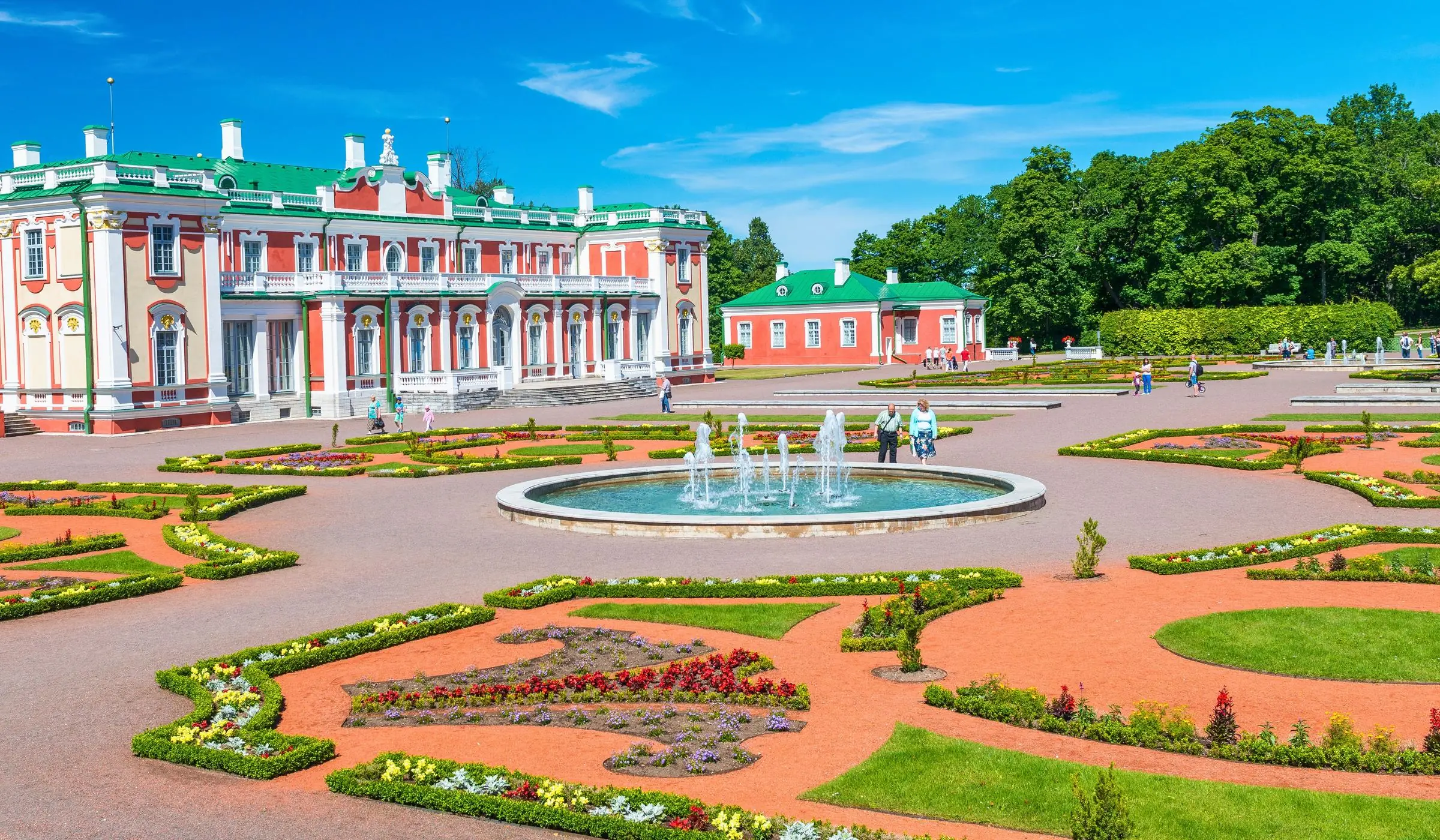
A sharp contrast to the medieval stone towers of Tallinn’s Old Town, Kadriorg Palace is a sprawling, red-and-white Baroque estate built by Russian Tsar Peter the Great for his wife, Catherine I. Today, it serves a dual purpose: it is the home of the Kadriorg Art Museum (displaying Estonia’s largest collection of Western European and Russian art) and the centerpiece of a massive 70-hectare urban park.
Visiting Kadriorg requires a slight shift in pace from the rest of the city. It sits about two kilometers east of the central hub, requiring a short tram ride and a willingness to walk. Whether you are here to analyze 17th-century Dutch paintings, admire the intricate stucco ceilings, or simply sit by the Swan Pond with a coffee, this guide breaks down exactly how to navigate the estate.
Who Should Visit (and How to Plan)
Because the estate is split into several distinct areas—the main palace interior, the surrounding free park, and various outbuildings—your strategy should depend on your schedule and budget.
- For the Time-Poor: If you only have an hour, skip the museum interior. Walk from the tram stop, admire the Swan Pond, take photos of the palace’s exterior from the Upper Garden, and head back. You get the visual impact without the time commitment.
- For Budget Travelers: The entire 70-hectare Kadriorg Park, including the formal gardens immediately surrounding the palace, is completely free to enter. You only pay if you go inside the palace or the cottage museums. If you plan to go inside, the Tallinn Card covers your entry, as well as the tram ride to get there.
- For Art & History Enthusiasts: Allocate at least 2.5 hours. You will want time to view the Foreign Art Museum inside the palace, walk up the hill to the Peter the Great House Museum, and potentially book a Kadriorg District Guided Tour to understand the complex imperial history of the area.
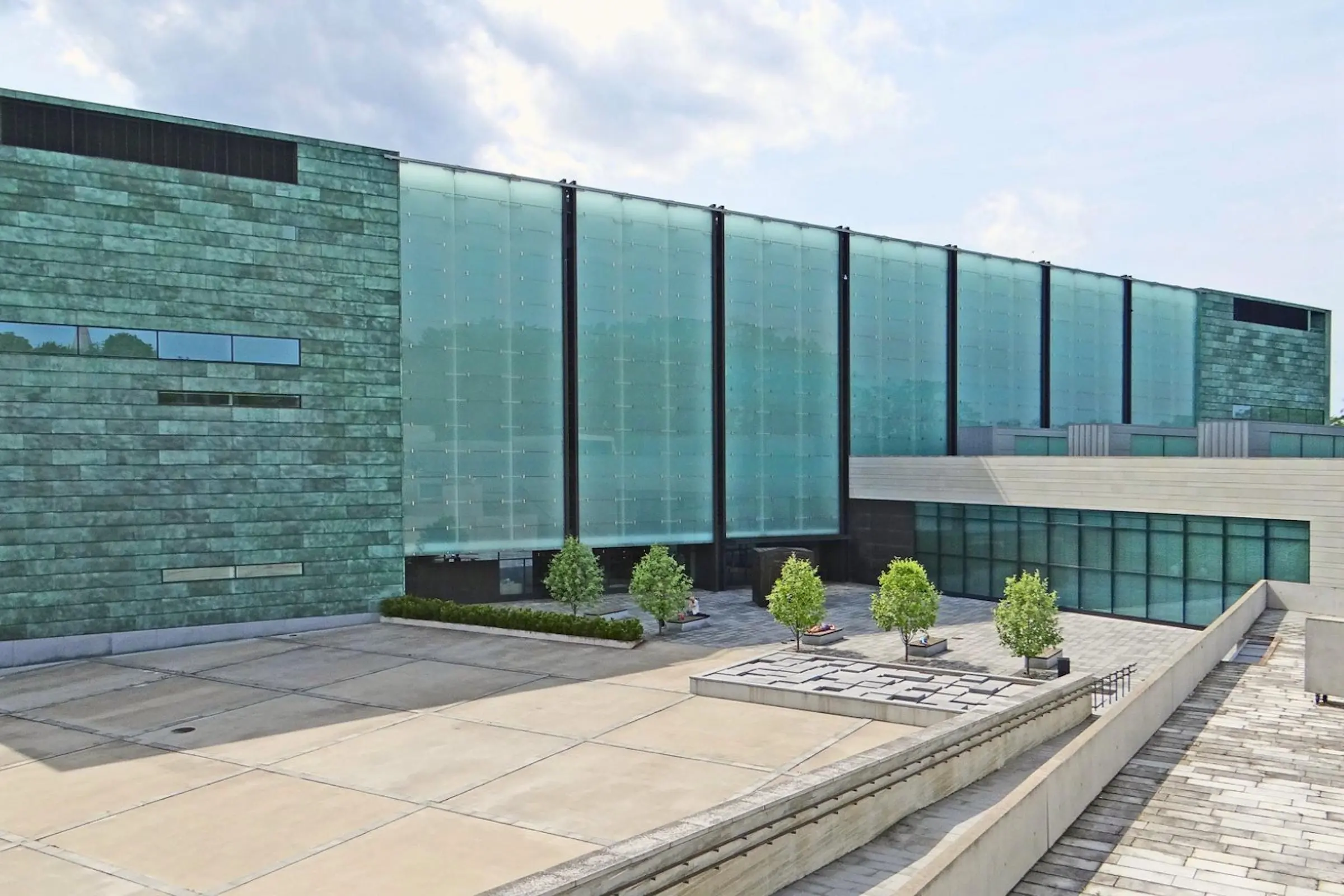
Kadriorg Palace sits just down the hill from the massive Kumu Art Museum. If you plan to visit both, start at Kumu (which is much larger) in the morning, grab lunch in the area, and do the Kadriorg Palace interior in the afternoon. Both are included in the Tallinn Card.
5 Highlights of the Kadriorg Estate
The estate is vast, but these five specific structural and landscape elements form the core of the Kadriorg experience.
1. The Main Hall Stucco Decorations
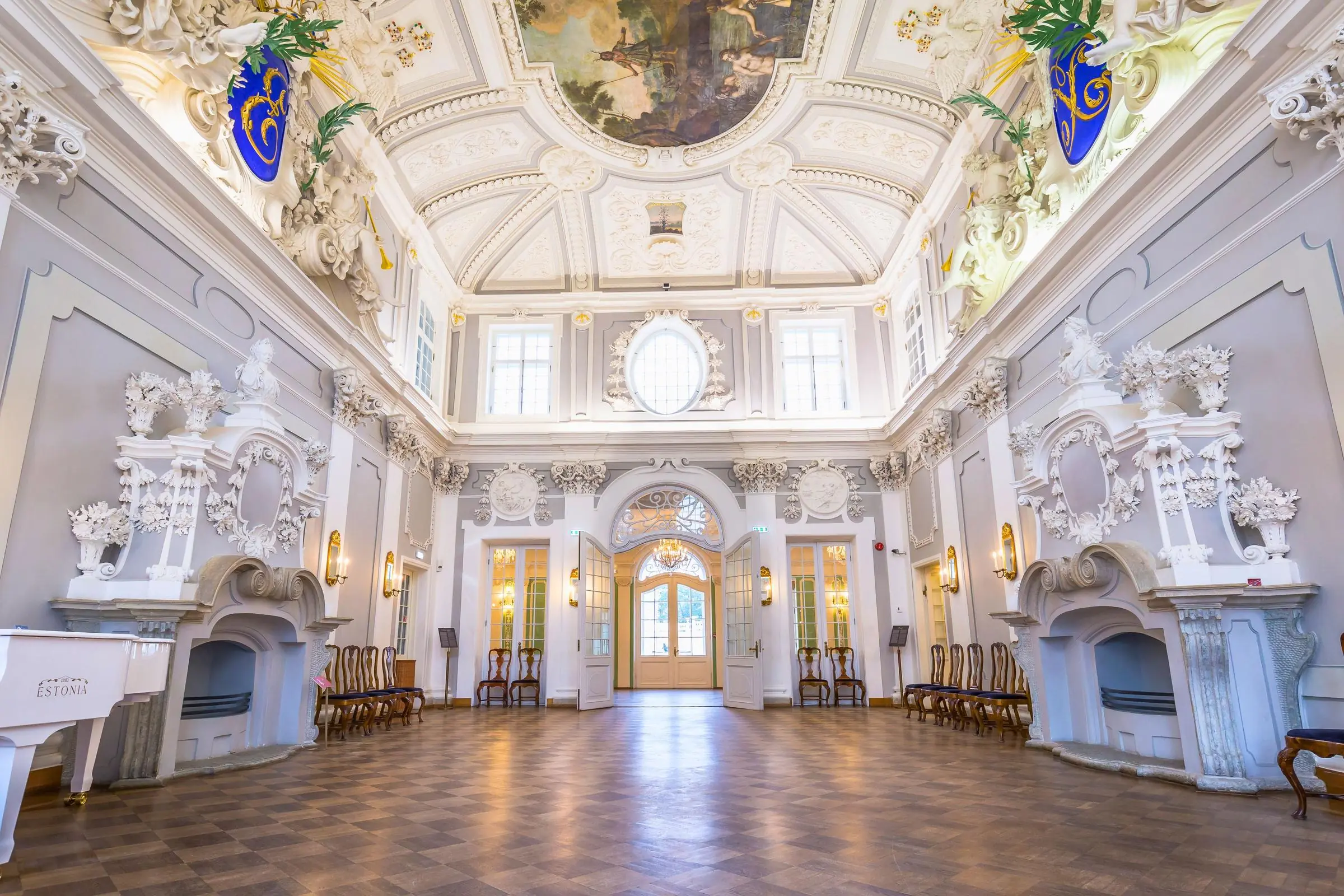
The undisputed architectural focal point of the palace is the two-story Great Hall. Designed in the Petrine Baroque style by Italian architect Nicola Michetti, the room was intended to project imperial power. The walls and ceilings are covered in elaborate, high-relief stucco work created by Riga craftsman Matthias Seidtinger and Italian Antonio Quadri. Look up to see the massive ceiling fresco depicting the myth of Diana and Actaeon. The room is heavily gilded, featuring the initials of Peter and Catherine intertwined in the molding. It is one of the most well-preserved Baroque interiors in Northern Europe.
2. The Foreign Art Museum Collections
While Kumu houses Estonian art, Kadriorg Palace holds the Art Museum of Estonia’s foreign collection. The permanent exhibition spans the 16th to the 20th centuries. The collection is heavily weighted toward Dutch, Flemish, and German masters, alongside a significant wing dedicated to Russian art (including works by Ilya Repin and Ivan Aivazovsky). The galleries are relatively small, meaning you can comfortably view the entire collection in about 45 to 60 minutes without feeling overwhelmed.
3. The Manicured Swan Pond & Gardens
The landscape architecture of Kadriorg is split into two main sections. The Upper Garden (behind the palace) features strict, symmetrical French-style parterres, fountains, and gravel paths that align perfectly with the palace’s rear facade.
However, the most popular area is the lower Swan Pond (Luigetiik). Located near the tram stop, this large, tree-lined pond features a central island with a classical gazebo. It is heavily manicured, surrounded by seasonal flower beds, and serves as the primary gathering spot for locals on sunny weekends.
4. Peter the Great House Museum
Before the grand palace was finished, Peter the Great and Catherine stayed in a modest 17th-century cottage nearby. Known as the “Old Palace,” this small building has been preserved as a museum. It sits on a slight hill just south of the main palace. Inside, the rooms are furnished with items from the early 18th century, including some of Peter’s personal belongings. It provides a stark, fascinating contrast to the opulent Baroque palace just a few hundred meters away.
5. The Office of the President of the Republic
Directly adjacent to the Upper Garden sits a salmon-pink Neo-Baroque building constructed in the 1930s. This is the official residence and workplace of the President of Estonia. While you cannot go inside, you can walk right up to the front gates. You will see the presidential honor guard standing at attention. The proximity of the imperial Russian palace and the modern Estonian presidential office creates a unique historical juxtaposition.
Keep Planning: If you are interested in Estonia’s modern political history and its break from Soviet rule, read our guide to the Vabamu Museum of Occupations and Freedom.
Logistics: Transit and Entry Paths
Getting to Kadriorg from the city center is straightforward, but understanding the layout of the park saves you unnecessary walking.
Tram Connections from the Central Hub
The easiest way to reach Kadriorg is via Tallinn’s tram network.
- The Route: Take Tram 1 or Tram 3.
- The Hub: You can board at the
Hobujaamastop (the central transit hub right next to the Viru Keskus shopping mall) or theVirustop. - The Destination: Ride eastbound for about 10 to 12 minutes until the tram terminates at the
Kadriorgstop. - Tickets: You can tap a contactless credit card on the orange validators inside the tram, or ride for free if you have an active Tallinn Card.
Comparing Entry Paths
Once you get off the tram, you have two primary ways to approach the palace:
Path A: The Grand Approach (Weizenbergi Street)
- Best for: First-time visitors and those wanting the classic view.
- The Route: From the tram stop, walk straight down A. Weizenbergi street. You will pass the Swan Pond on your right. The street leads directly to the front gates of the palace. This path is flat, paved, and offers a slow, dramatic reveal of the palace facade.
Path B: The Kumu Descent (Valge Street)
- Best for: Those visiting Kumu Art Museum first.
- The Route: If you take a bus to the
Kumustop on Valge street, you will start at the top of the limestone cliff. After visiting Kumu, you walk down the stairs through the park, arriving at the rear of Kadriorg Palace (the Upper Garden). This path is downhill but involves stairs, making it less ideal for strollers or wheelchairs.
The Ideal Kadriorg Afternoon
⏱️ Total: 3 hArrive via Tram
Take Tram 1 or 3 to the Kadriorg terminus. Walk past the Swan Pond and grab a coffee at the nearby park cafe.
Palace Interior & Art Museum
Enter the palace. Check your coat and bags in the basement lockers. Spend an hour viewing the Great Hall and the foreign art galleries.
Upper Garden & Presidential Palace
Exit the rear of the palace. Walk the symmetrical paths of the Upper Garden and view the Presidential Palace guards.
Peter the Great House
Walk five minutes up the hill to the modest cottage museum to see where the Tsar actually lived during construction.
Local Tips for Visiting
- Bag Policy: You cannot wear backpacks inside the art museum. There is a free, secure cloakroom and locker area in the basement near the ticket desk. You will need a 1 Euro coin as a deposit for the lockers (it is returned when you open it).
- Footwear: You will be given plastic shoe covers to wear over your shoes before walking on the historic parquet floors in the Great Hall.
- Photography: Photography is allowed inside the palace, but flash is strictly prohibited to protect the artwork.
- Alternative Transit: If you are using the City Sightseeing Hop-On Hop-Off Bus, the Red Line stops directly at the Kadriorg Park entrance.
Where to Stay Near Kadriorg
The Kadriorg neighborhood is one of Tallinn’s most affluent and quiet residential areas, characterized by historic wooden houses and leafy streets. Staying here is ideal if you want to escape the late-night noise of the Old Town, though you will need to rely on the tram to reach central restaurants.
If you prefer to be closer to the action but still want easy access to the tram line that runs to Kadriorg, look for accommodations in the Rotermann Quarter or near the Hobujaama transit hub.
Frequently Asked Questions
Is Kadriorg Park free to enter?
Yes, the 70-hectare park, including the Swan Pond and the formal gardens immediately surrounding the palace, is completely free and open to the public year-round. You only need a ticket to enter the palace building itself.
How much time do I need for Kadriorg Palace?
To view the interior art museum and the Great Hall, budget about 60 to 90 minutes. Add another hour if you want to walk the gardens and visit the nearby Peter the Great House Museum.
Is Kadriorg Palace wheelchair accessible?
The park paths are paved or packed gravel and are fully accessible. The palace interior has an elevator to assist visitors with mobility issues in reaching the upper floors, though some of the historic doorways are narrow.
Are dogs allowed in Kadriorg Park?
Dogs are welcome in the outdoor park areas provided they are kept on a leash. However, pets are not allowed inside the palace, the art museum, or the cottage museums.
When do the fountains in the park operate?
The fountains in the Swan Pond and the Upper Garden typically operate from mid-May through September, depending on weather conditions. They are turned off and covered during the winter months.
Can I buy tickets at the door?
Yes, you can buy tickets at the basement reception desk. However, if you plan to visit multiple museums in Tallinn, purchasing the Tallinn Card in advance is usually more cost-effective.
For official exhibition schedules and temporary closures, verify details on the Kadriorg Art Museum official website. For broader city planning, consult Visit Estonia.