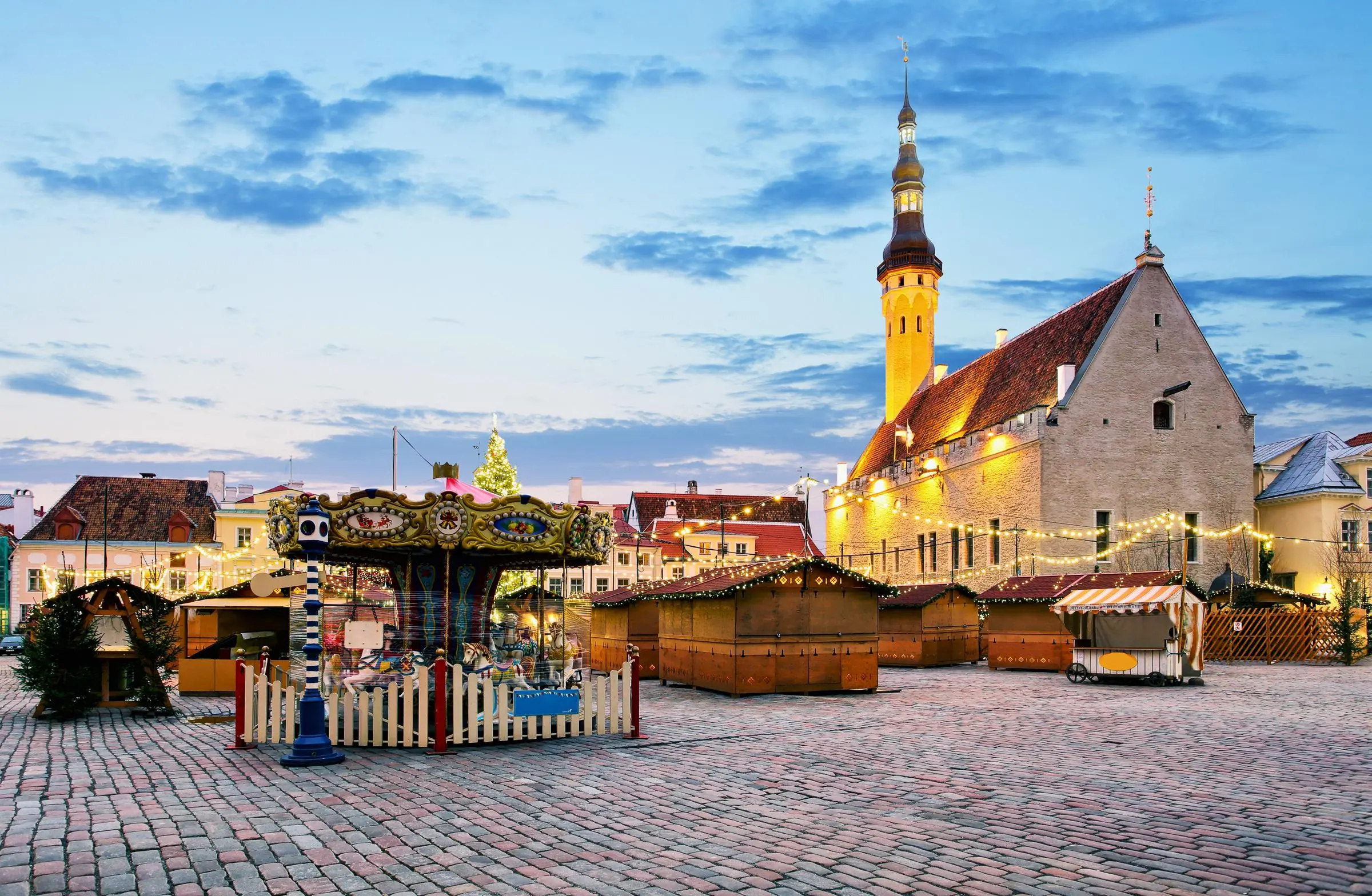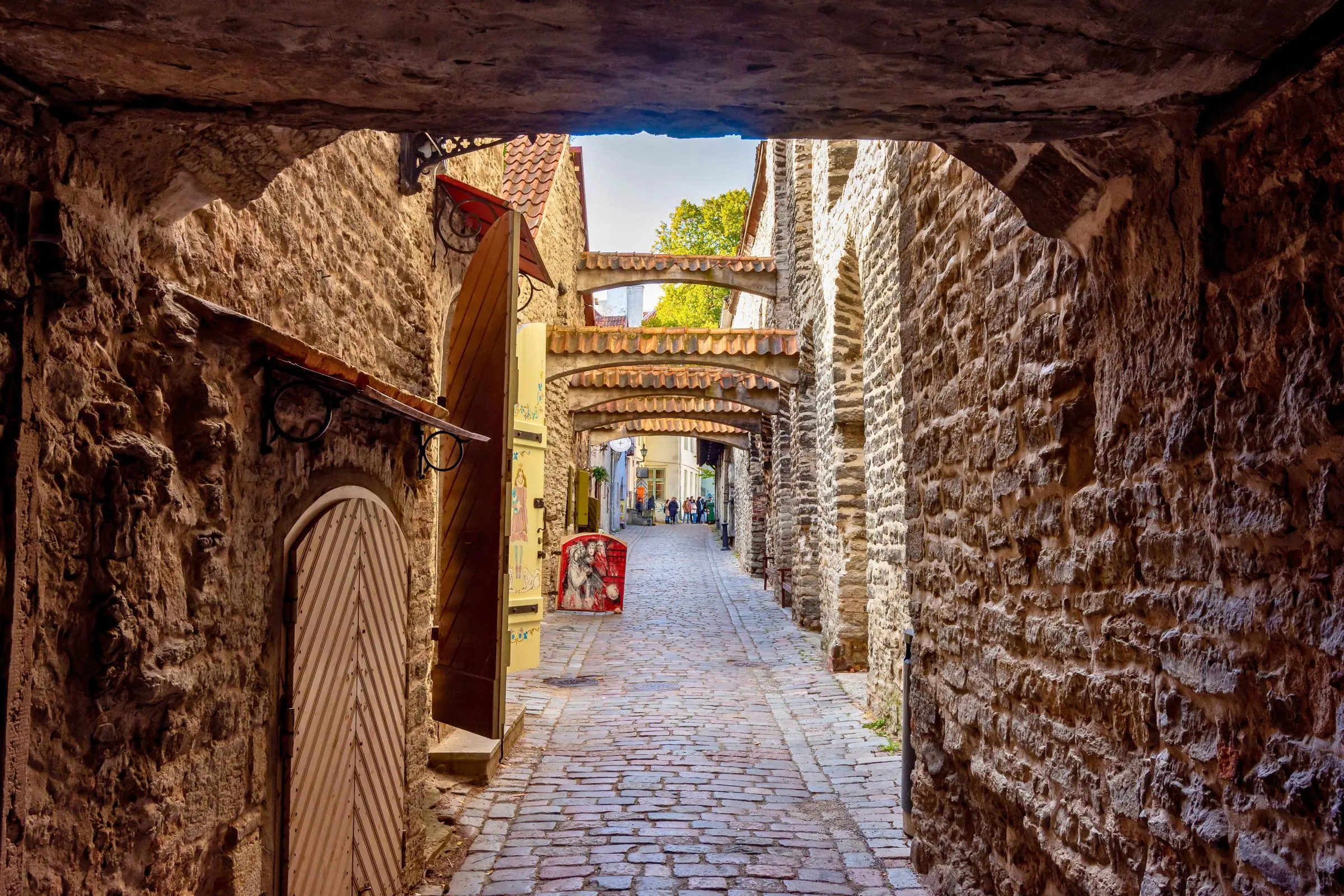
Connecting Vene Street to Müürivahe Street in the eastern part of Tallinn’s Old Town, St. Catherine’s Passage (Katariina käik) is a narrow, cobblestone alleyway that feels entirely removed from the modern world. Running along the southern wall of the ruined St. Catherine’s Dominican Monastery, this passage is defined by its heavy stone arches, centuries-old tombstones, and the quiet hum of traditional artisan workshops.
Unlike many historic streets that have been converted entirely into souvenir shops, St. Catherine’s Passage remains a working environment. The studios here belong to the St. Catherine’s Guild (Katariina Gild), a collective of female artists who use traditional methods to create glass, ceramics, leatherwork, and textiles.
Whether you are here to photograph the architecture, buy a hand-woven linen scarf, or simply take a shortcut through the Old Town neighborhood, this guide breaks down exactly what you are looking at and how to plan your visit.
How to Approach Your Visit
Because the passage is short—only about 135 meters long—your experience depends heavily on when you go and what you want to get out of it.
- For Photographers: The alley is open 24/7. If you want clear shots of the arches without people in neon rain jackets walking through, arrive before 8:30 AM. The morning light also creates strong, moody shadows along the textured stone walls.
- For Shoppers & Art Enthusiasts: The artisan workshops generally operate between 11:00 AM and 5:00 PM (hours vary slightly by season and individual studio). This is the time to visit if you want to watch glassblowers or weavers at work.
- For History Buffs: The visual details here are dense. To understand the context of the monastery ruins and the merchant tombstones, it is highly recommended to join a guided tour. Guides carry keys to areas you cannot access on your own and provide the narrative behind the stone carvings.
Accessibility Note: The cobblestones in St. Catherine’s Passage are large, uneven, and often slippery when wet. Wheelchair users and those with strollers will find this specific street challenging to navigate. Wear flat, thick-soled shoes.
Historical Context: The Dominican Monastery
To understand the passage, you have to understand the massive stone wall that forms its northern boundary. This is the surviving sanctuary wall of St. Catherine’s Church, which was part of a Dominican monastery founded in 1246.
For nearly 300 years, the Dominicans were a powerful force in Tallinn, brewing beer, translating religious texts into Estonian, and acting as a bridge between the wealthy Baltic German merchants and the local Estonian population. In 1524, during the fervor of the Reformation, a mob attacked the monastery, forcing the monks to flee. A subsequent fire in 1531 destroyed much of the church.
The passage as you see it today is essentially a medieval service alley that ran behind the church. The city restored the walkway in the 1990s, mounting surviving artifacts onto the walls and inviting artisans to set up shop in the adjacent buildings.
Keep Planning: To dive deeper into Tallinn’s medieval defenses and structures, read our guide to the nearby Town Wall Towers.
Deep Dive: 5 Highlights of the Passage
It is easy to walk through St. Catherine’s Passage in two minutes and miss the details. Slow down and look for these five specific elements.
1. Surviving Medieval Tombstone Slabs
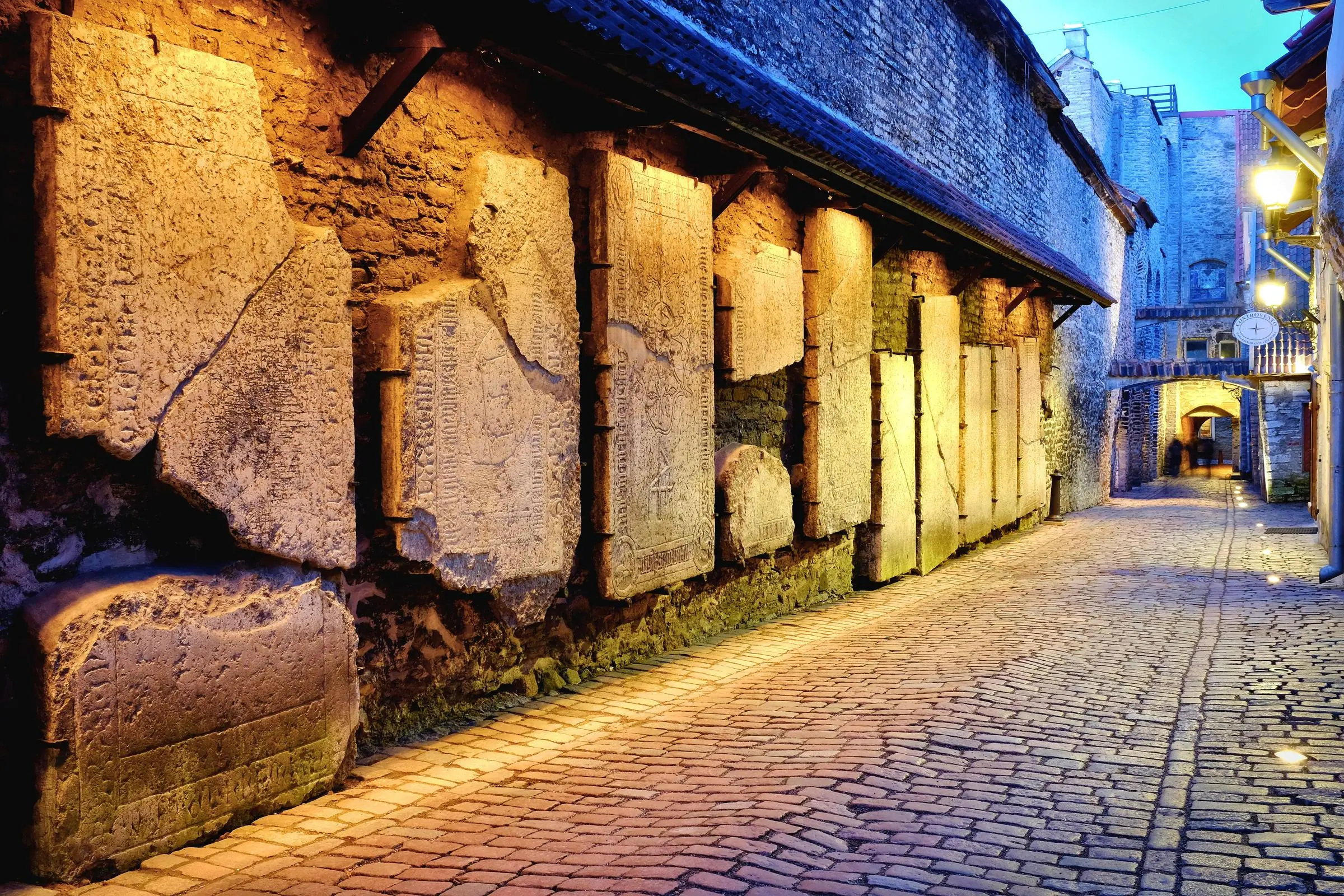
As you enter the passage from Vene Street, look at the massive stone slabs mounted on the right-hand wall. These are original 14th and 15th-century tombstones salvaged from the floor of the ruined St. Catherine’s Church.
They belonged to wealthy burghers, guild elders, and members of the Brotherhood of the Blackheads (a guild of unmarried merchants). Look closely at the carvings: you will see family crests, merchant marks (geometric symbols used to brand cargo), and intricate border inscriptions in Low German. The most famous slab belongs to Kunigunde Schotelmund, dating back to 1381, making it one of the oldest surviving stone carvings in the city.
2. Stone Arch Bracing Networks
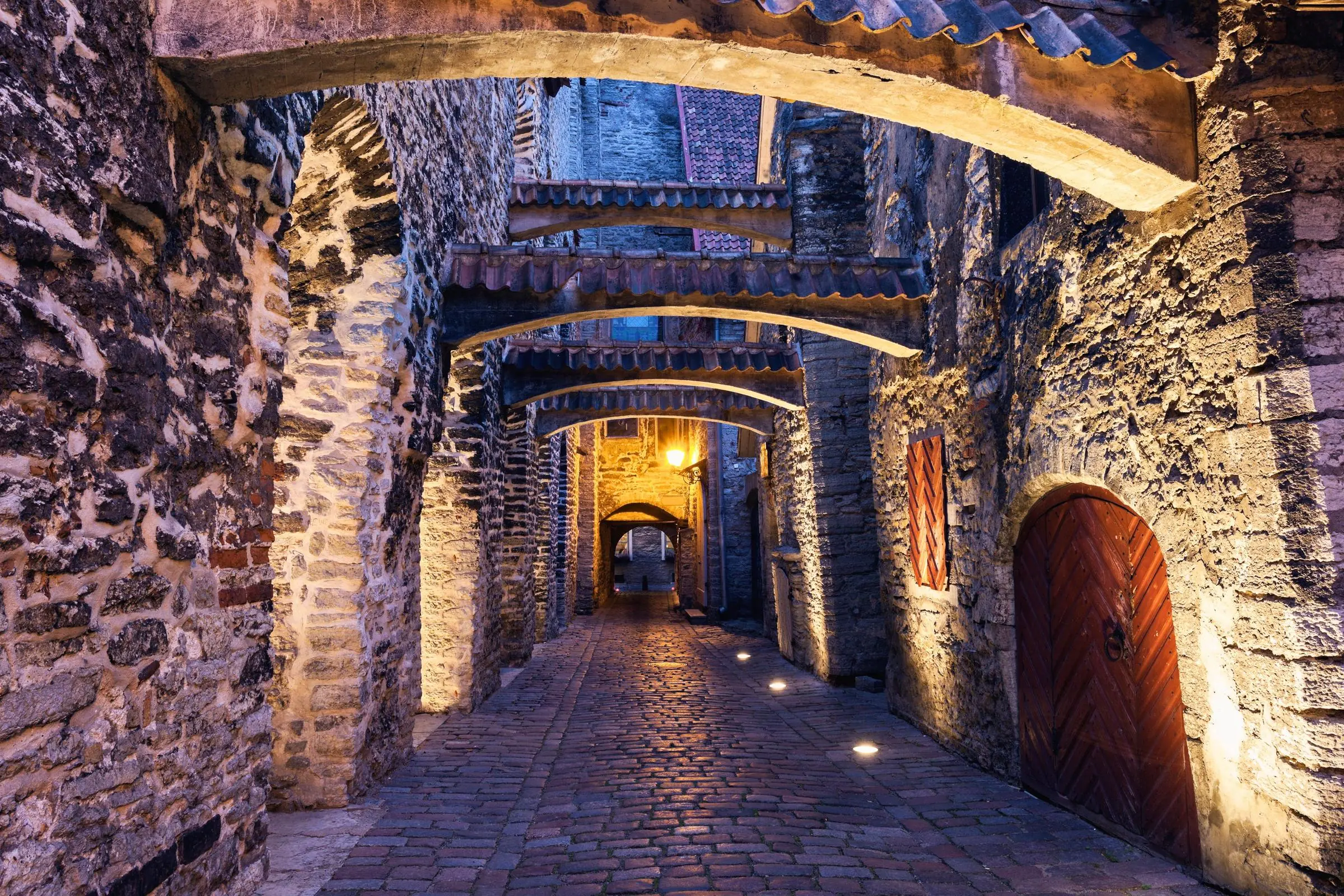
The most photographed feature of the passage is the series of stone arches spanning the alley overhead. These are not decorative. They are strutting arches (a form of flying buttress) added after the 1531 fire.
When the roof of the massive church collapsed, the remaining southern wall became structurally unstable. To prevent it from falling into the alley, medieval engineers built these stone braces, pushing the weight of the church wall against the sturdy residential and guild buildings on the opposite side of the street. Notice how some arches are thicker than others, reflecting repairs made over different centuries.
3. Open Glassblowing Workshops
About halfway down the passage on the southern side, you will find the St. Catherine’s Guild glass studio. Unlike standard retail shops, this is an active hot shop.
If you visit during the day, the heavy wooden doors are often propped open, and you can feel the intense heat of the furnaces rolling out into the cool alley. You can stand quietly inside and watch the artisans gather molten glass on blowpipes, shaping it into vases, goblets, and ornaments. There is no pressure to buy, but purchasing directly from the studio supports the continuation of the guild.
4. Traditional Linen Weaving Loom Stations
Further down the passage is the textile workshop. The sound of heavy wooden floor looms clacking is a constant background noise here.
The weavers specialize in traditional Estonian linen and wool, creating scarves, table runners, and clothing. The patterns often incorporate ancient regional motifs. Because the looms are massive, they take up most of the studio space, allowing you to see exactly how the threads are warped and woven. It is a slow, methodical process that contrasts sharply with modern fast fashion.
5. Hidden Courtyard Gates
Along the northern wall (the church side), you will notice several small, heavy wooden doors with wrought-iron hardware. These lead into the inner courtyard of the former Dominican Monastery.
While the passage itself is free, access to the monastery courtyard and the surviving cloisters usually requires a small entry fee (typically around €5, payable at the entrance on Vene Street, not through these side doors). However, peering through the iron grates or catching a glimpse when a door is temporarily opened reveals a quiet, grassy sanctuary surrounded by crumbling Gothic arches—a stark contrast to the stone-heavy alleyway.
Top Tours Covering St. Catherine's Passage
Guided Old Town Historical Walking Tour
- 2-hour comprehensive walking tour
- Covers St. Catherine’s Passage and Town Hall Square
- Live guide explaining the Dominican history
Medieval Tallinn 2-Hour Walking Tour
- Focuses heavily on medieval architecture and guilds
- Smaller group sizes
- Includes stops at artisan workshops
Artisan Workshop Map & Etiquette
The St. Catherine’s Guild (Katariina Gild) consists of several distinct studios, all located on the southern side of the passage.
- Vene Street End: Glass studio and ceramics workshop.
- Middle Section: Leatherwork (look for hand-bound journals and bags) and jewelry studios.
- Müürivahe Street End: Textile and silk-painting workshops.
Etiquette Tips:
- Photography: You are welcome to photograph the alleyway, but always ask permission before taking close-up photos of the artisans working or specific pieces of art inside the studios.
- Space: The studios are small and often crowded with fragile items. Remove large backpacks before entering.
- Purchasing: Most studios accept card payments, but having a little cash (Euros) is helpful for smaller items.
Photography Viewpoints
To capture the best images of St. Catherine’s Passage, positioning is key.
- The Compression Shot: Stand at the far eastern end (near Müürivahe Street) and look back toward Vene Street. Use a zoom lens (70mm or longer) to compress the distance. This stacks the stone arches visually, making the alley look incredibly dense and medieval.
- The Tombstone Texture: Visit in the late afternoon (around 4:00 PM in summer). The sun dips low enough to cast raking light across the northern wall, highlighting the deep grooves of the 14th-century stone carvings.
- The Workshop Glow: In the winter months, the passage gets dark by 3:30 PM. The warm, yellow light spilling out from the glassblowing and textile studios against the blue twilight creates a perfect, cozy atmosphere.
Logistics & Local Tips
Getting There
St. Catherine’s Passage is pedestrian-only.
- From Town Hall Square: Walk east on Vanaturu kael, turn left onto Vene Street, and walk about 100 meters. The entrance to the passage will be on your right, marked by a small archway.
- From the Viru Gates: Walk up Viru Street, turn right onto Müürivahe Street (running along the city wall), and the passage entrance will be on your left.
Avoiding the Crowds
During the summer cruise ship season (May to August), the passage becomes a major bottleneck between 10:00 AM and 2:00 PM. Large tour groups stop in the middle of the alley to look at the tombstones, making it difficult to pass. If you want a peaceful experience, visit before 9:30 AM or after 4:00 PM.
Nearby Coffee & Restrooms
There are no public restrooms or cafes directly inside the passage. However, just steps away on Vene Street, you will find Chocolaterie Pierre (located in the adjacent Masters’ Courtyard), which is famous for its rich hot chocolate and bohemian atmosphere. For a modern coffee, RØST Bakery in the nearby Rotermann Quarter is a 10-minute walk away.
If you plan to visit multiple museums and take public transit, check if the Tallinn Card makes sense for your itinerary. While the passage itself is free, the card covers entry to the nearby Town Wall and major museums.
Accommodation Context: Where to Stay Nearby
Staying near St. Catherine’s Passage puts you right in the heart of the medieval Lower Town. This area is incredibly atmospheric, though it can be noisy in the summer due to foot traffic. Look for hotels on Vene Street or Uus Street for easy access without being directly on the loudest nightlife strips.
Frequently Asked Questions
Is there an entrance fee for St. Catherine's Passage?
No, the passage itself is a public street and is completely free to walk through at any time of day or night. You only pay if you choose to buy something from the artisan workshops or if you pay the separate entry fee to go inside the adjacent Dominican Monastery courtyard.
How long does it take to visit?
If you are just walking through to take a few photos, it takes about 5 to 10 minutes. If you plan to stop, read the plaques by the tombstones, and browse the artisan workshops, plan for 30 to 45 minutes.
Are the artisan workshops open on weekends?
Yes, most of the St. Catherine’s Guild workshops are open on Saturdays and Sundays, typically from 11:00 AM to 5:00 PM. However, individual artists set their own hours, so some specific studios may be closed on Sundays, especially in the off-season (November to March).
Can you go inside the St. Catherine's Church ruins?
You cannot enter the church ruins directly from the passage. To see the interior of the Dominican Monastery and the remaining cloisters, you must enter through the main museum entrance on Vene Street (Vene 16). The museum is usually open from May to September.
Is the passage illuminated at night?
Yes, the passage has atmospheric street lighting at night. It is very safe to walk through after dark, and the shadows cast by the arches make it a popular spot for evening photography.
Are the tombstones on the wall real?
Yes, they are authentic 14th and 15th-century tombstones. They originally paved the floor of St. Catherine’s Church. After the church was ruined, they were eventually moved and mounted on the exterior sanctuary wall in the 19th and 20th centuries to preserve them from further foot traffic wear.
For more official historical details regarding the preservation of the Old Town, you can reference the Visit Estonia Old Town Guide.