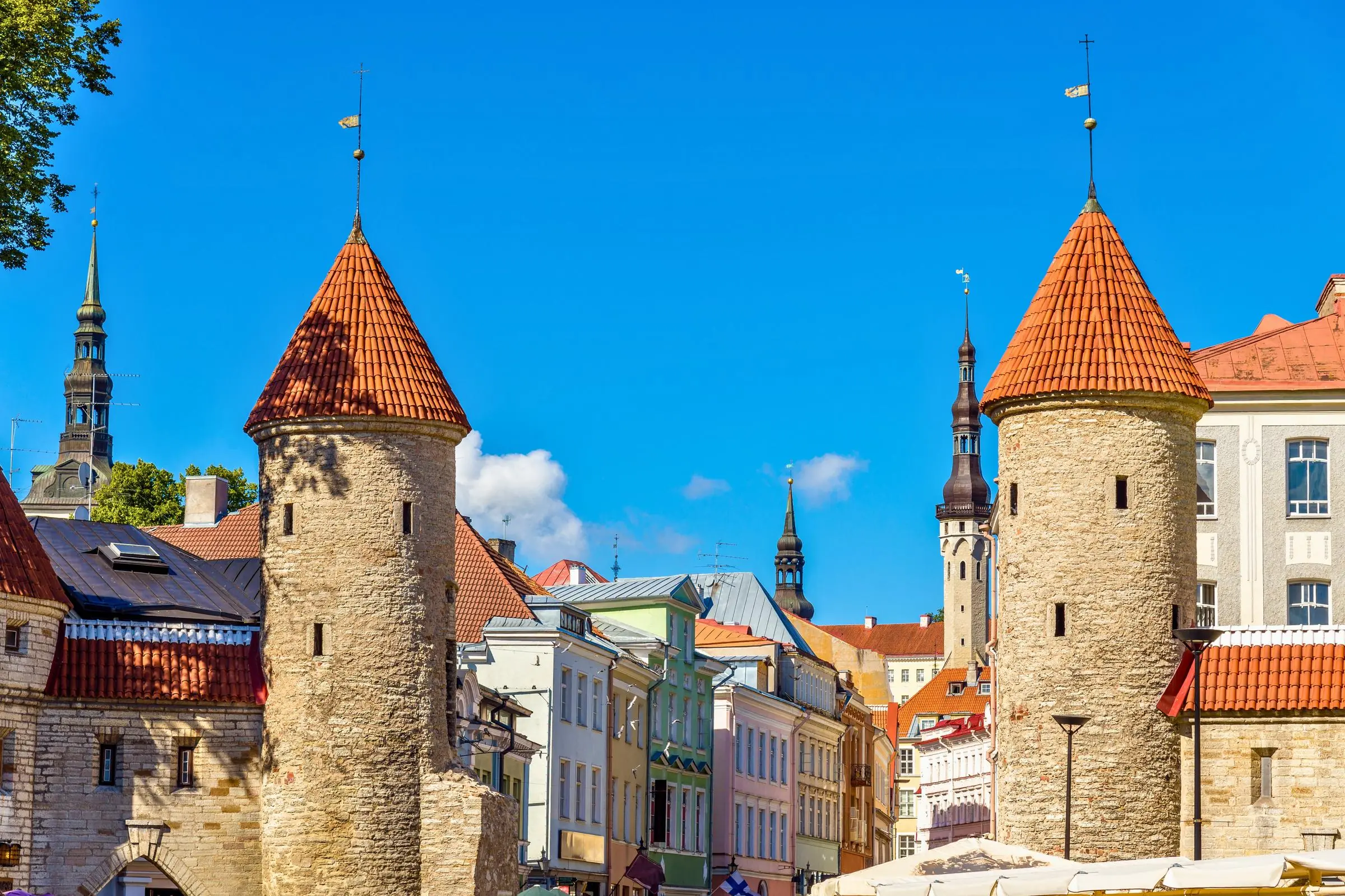
For most visitors, the Viru Gates are the first handshake with medieval Tallinn. Standing at the eastern edge of the Old Town, these twin, ivy-draped stone towers look like they were pulled straight from a fairy tale. In reality, they are the surviving remnants of a highly practical, heavily fortified 14th-century defense system.
Today, the gates act as a pedestrian funnel, bridging the modern glass-and-steel commercial district with the cobblestone streets of the historic center. Because it is a public street, visiting the gates is completely free and accessible 24/7. However, understanding what you are looking at—and knowing how to navigate the immediate surroundings—will make your walk through this historic threshold much more rewarding.
This guide covers the history of the gates, breaks down the five key highlights immediately surrounding them, and offers practical advice on how to weave them into your broader Tallinn itinerary.
Historical Context: More Than Just Two Towers
When you look at the Viru Gates today, you aren’t actually looking at the main gate. You are looking at the foregates.
Built in the 14th century, the original Viru Gate complex was a massive, multi-layered defensive structure. It included a large square gate tower built directly into the main city wall, protected by a deep moat, a drawbridge, and these two smaller, round foregate towers positioned further out to harass attackers.
By the late 1800s, Tallinn’s population was booming, and horse-drawn traffic needed better access to the city center. The city council made the controversial decision to demolish the main gate tower and fill in parts of the moat to widen the street. The two round foregate towers were spared simply because they didn’t block the new road alignment.
Look closely at the walls: As you walk between the towers, look down at the cobblestones and up at the adjacent buildings. You can still see the faint architectural scars where the massive main gate once connected to the surrounding town wall towers.
Advice for Different Traveler Types
Because the Viru Gates are a public thoroughfare rather than a ticketed museum, how you experience them depends entirely on your schedule and travel style.
- For the Time-Poor: If you only have a few hours in Tallinn (perhaps on a cruise shore excursion), use the Viru Gates as your starting line. Snap your photos from the park side (where the ivy looks best), walk through the towers, and head straight up Viru Street to the Town Hall Square. It takes less than 10 minutes to walk this stretch.
- For Budget Travelers: The gates and the surrounding parks are entirely free. Instead of paying for expensive coffees on the main tourist drag, grab a pastry from a bakery outside the Old Town, sit on the benches at Musumägi (Kissing Hill) right next to the gates, and enjoy the medieval views for zero euros. If you plan to enter multiple paid towers and museums later, consider picking up the Tallinn Card to save money.
- For Families: The cobblestones immediately past the gates are relatively smooth, making them stroller-friendly compared to the steeper, rougher streets up on Toompea Hill. The nearby Tammsaare Park offers plenty of open space for kids to burn off energy before you dive into the crowded, narrow streets of the Old Town.
Deep Dive: 5 Surrounding Highlights
The Viru Gates are the anchor for a cluster of distinct micro-attractions. Don’t just walk through the towers and leave; take time to explore the immediate vicinity.
1. The Historic Flower Market Rows
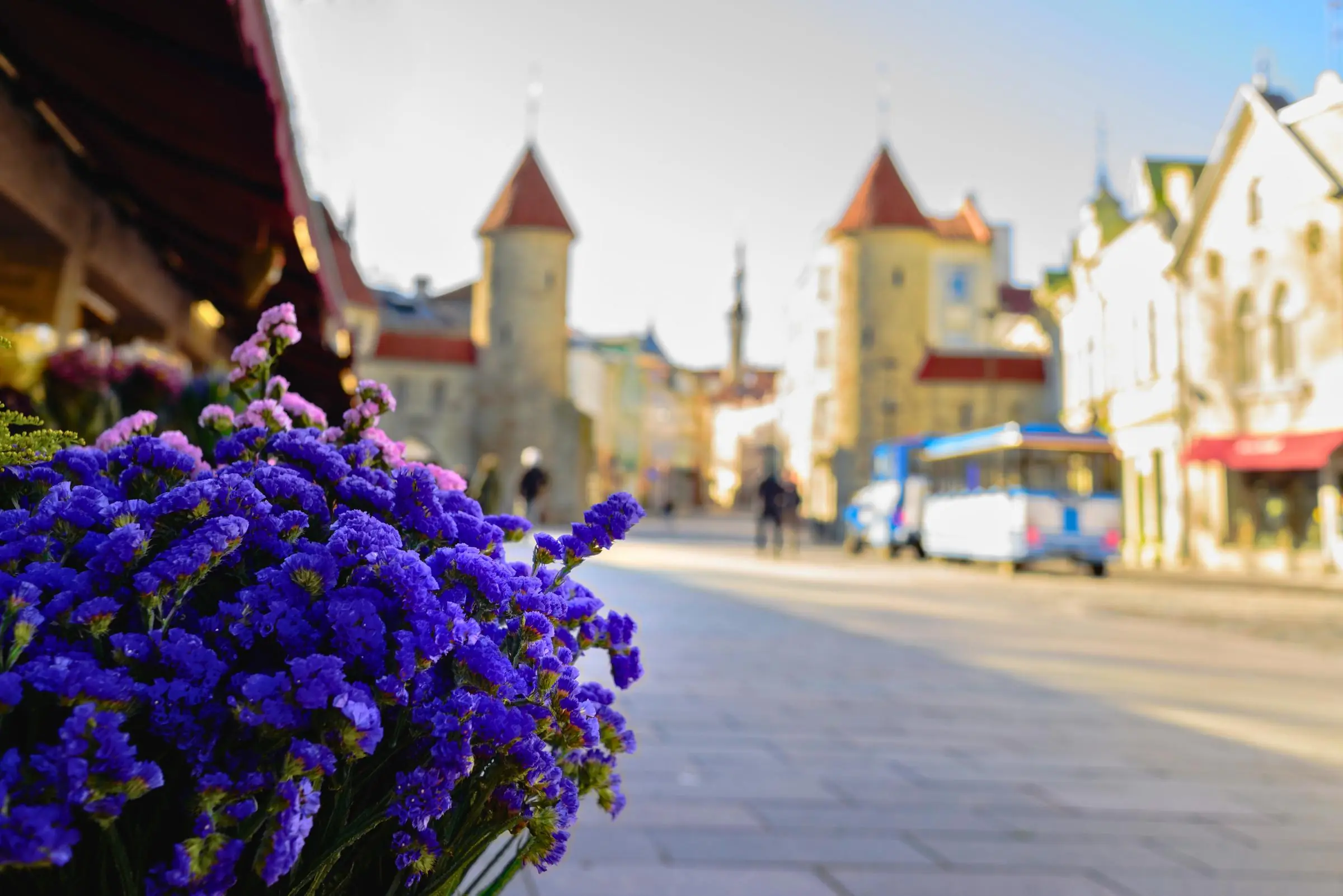
Just outside the gates, lining the right side of Viru Street as you approach the Old Town, is Tallinn’s famous open-air flower market. This row of glass-fronted stalls has been a local institution for decades. Remarkably, many of these stalls operate 24 hours a day, 365 days a year. Even in the dead of an Estonian winter, the stalls are brightly lit and packed with vibrant blooms. It’s a fantastic spot for photography, especially in the evening when the stalls glow against the dark stone of the city walls.
2. Musumägi (Kissing Hill) and the Clay Bastions
Immediately to the left of the gates (when facing the Old Town) is a small, elevated park known as Musumägi, or “Kissing Hill.” This hill isn’t a natural formation; it is the remnant of the Viru Gate Bastion, an earthen artillery platform built in the 17th century by the Swedish empire. When the city’s defenses were decommissioned in the 19th century, the bastion was landscaped into a romantic park. Walk up the short staircase for an excellent, slightly elevated vantage point of the Viru Gates—perfect for avoiding the crowds in your photos.
3. The Old City Moat Lines (Müürivahe Street)
Once you pass through the gates, take an immediate right onto Müürivahe (Wall-between) Street. This narrow, curving alley actually traces the path of the original defensive moat. Today, it is lined with local artisan shops and cafes on one side, and the towering, original 14th-century city wall on the other. If you walk a few minutes down this street, you’ll reach the Hellemann Tower, where you can pay a small fee to climb up and walk along a restored section of the medieval wall.
4. The Pedestrian Retail Track (Viru Tänav)
The street that begins at the gates and runs directly into the center of the Old Town is Viru tänav (Viru Street). This is the main pedestrian artery of the city. While it is undeniably touristy—lined with souvenir shops, roasted almond carts, and international brands—it is also undeniably beautiful. The pastel-colored merchant houses date back centuries, and the street perfectly frames the spire of the Town Hall in the distance.
Many of Tallinn’s best guided walks begin near the Viru Gates. If you want to understand the history behind the facades, booking a Guided Old Town Historical Walking Tour is highly recommended.
5. Open-Air Café Plazas
The area just outside the gates acts as a transition zone. Here, you’ll find several open-air café plazas that spill out onto the pavement during the summer months. While the restaurants directly on Viru Street tend to charge a “tourist premium,” the cafes situated just outside the gates near Tammsaare Park offer a great place to sit with a coffee and watch the endless stream of locals and tourists passing through the historic threshold.
Nearby Route Choices & Itineraries
The Viru Gates are a starting point. Once you are here, you have a few distinct route options depending on what you want to see next.
Route 1: Straight to the Heart
⏱️ Total: 45 minEnter the Gates
Start at the flower market, take your photos of the ivy-covered towers, and walk through the gates onto Viru Street.
Walk Viru Street
Stroll past the merchant houses, grab a cone of hot roasted almonds from a street vendor, and admire the architecture.
Arrive at Town Hall Square
The street deposits you directly into the Town Hall Square, the historic and cultural center of the city. From here, you can visit the oldest continuously running pharmacy in Europe.
Route 2: The Wall Walk
⏱️ Total: 1 hEnter and Turn Right
Pass through the Viru Gates and take an immediate right onto Müürivahe Street.
St. Catherine's Passage
Walk along the wall until you reach St. Catherine’s Passage, a stunning, half-hidden medieval alleyway lined with artisan workshops.
Hellemann Tower
Continue to the Hellemann Tower. Pay the small entry fee to climb the stairs and walk along the wooden gallery of the defensive wall for views over the red roofs of the Old Town.
Keep Planning: If you want to explore the darker side of Tallinn’s history after enjoying the medieval charm, read our guide to the KGB Prison Cells, located just a 10-minute walk from the gates.
Logistics & Practical Tips
Getting There
The Viru Gates are incredibly easy to reach via public transport.
- Tram: Take Tram 1, 2, 3, or 4 and get off at the Viru stop. The gates are a 2-minute walk across the plaza.
- Bus: The massive Viru Keskus underground bus terminal is just a block away, serving dozens of city lines.
- Walking: If you are staying in the Rotermann Quarter or the modern city center, the gates are a flat, 5-minute walk away.
Best Time to Visit
Because this is the main entrance to the Old Town, it gets exceptionally crowded between 10:00 AM and 4:00 PM, especially in the summer when cruise ships are in port.
- For Photography: Arrive before 9:00 AM. The morning light hits the eastern-facing towers beautifully, and you’ll have the street mostly to yourself (aside from locals walking to work).
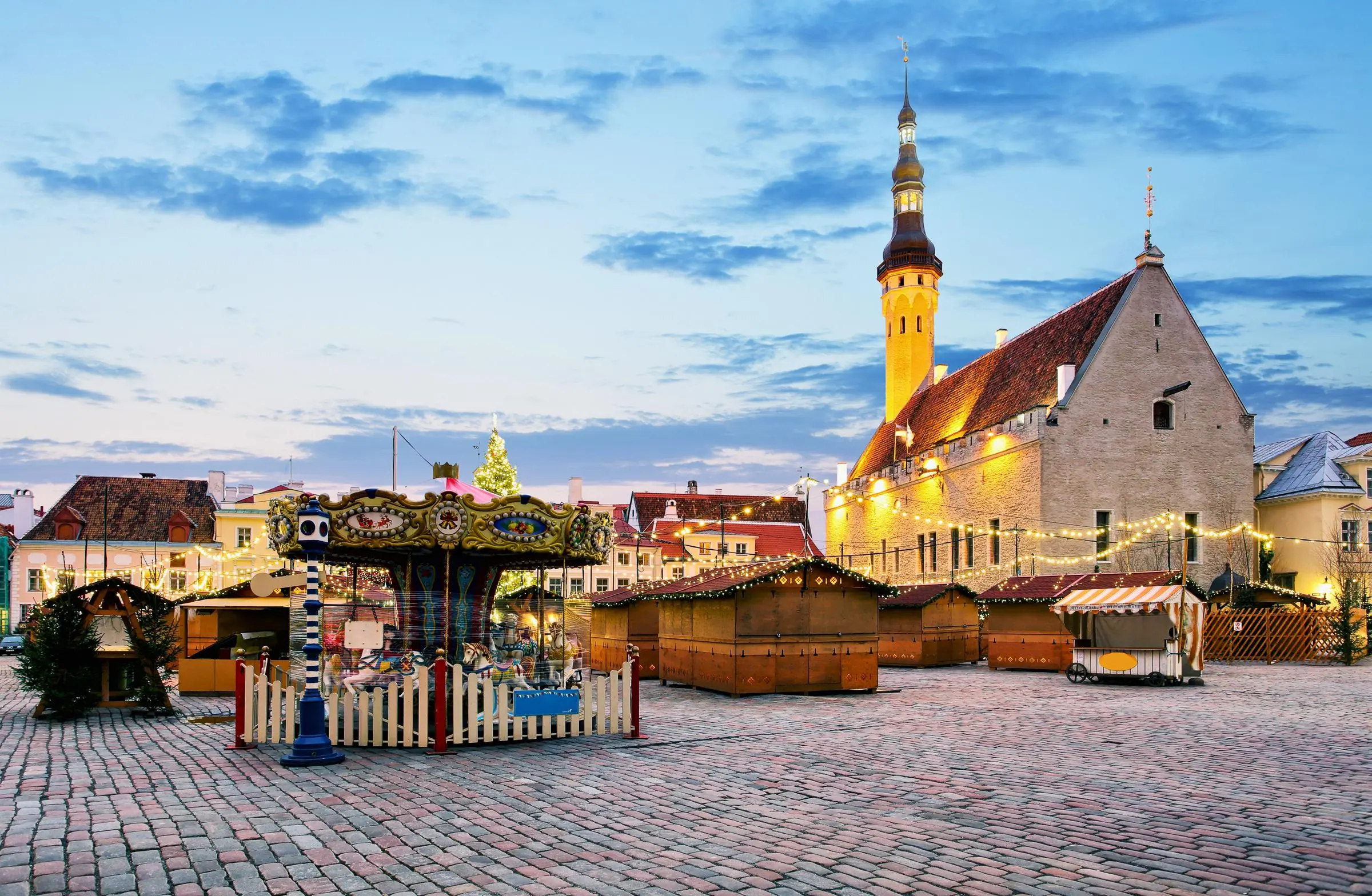
- In Winter: The gates are magical during the Christmas Market season (late November to early January), when they are strung with lights and often dusted with snow.
Watch Your Step (and Your Pockets): The cobblestones immediately past the gates are uneven and can be slippery when wet. Additionally, because this area creates a natural bottleneck for tourists, it is one of the few places in Tallinn where you should be mildly mindful of pickpockets during peak summer crowds. Read our safety guide for more context.
Guided Tours
If you prefer to have a local explain the history rather than reading a guidebook, the Viru Gates are a standard stop on almost every walking tour.
Where to Stay Near the Viru Gates
Staying near the Viru Gates is highly recommended if you want the charm of the Old Town combined with the convenience of the modern city. Hotels just outside the gates (in the modern center) often offer better value and modern amenities like air conditioning and elevators, while hotels just inside the gates offer historic atmosphere.
Use the map below to check current rates for hotels and apartments in the immediate vicinity of the Viru Gates.
Frequently Asked Questions
Do I need a ticket to visit the Viru Gates?
No. The Viru Gates are a public street and pedestrian walkway. You can walk through them for free at any time of day or night.
How much time do I need to see the gates?
You only need about 5 to 10 minutes to view the gates, take photos, and look at the flower market. However, you can easily spend an hour exploring the adjacent parks, the city wall on Müürivahe street, and the nearby cafes.
Are the Viru Gates wheelchair accessible?
Yes, the path through the gates is paved and ramped. However, once you pass through the gates, Viru Street is made of historic cobblestones, which can be bumpy and challenging for some mobility devices, though it is flatter than other parts of the Old Town.
Can you go inside the towers?
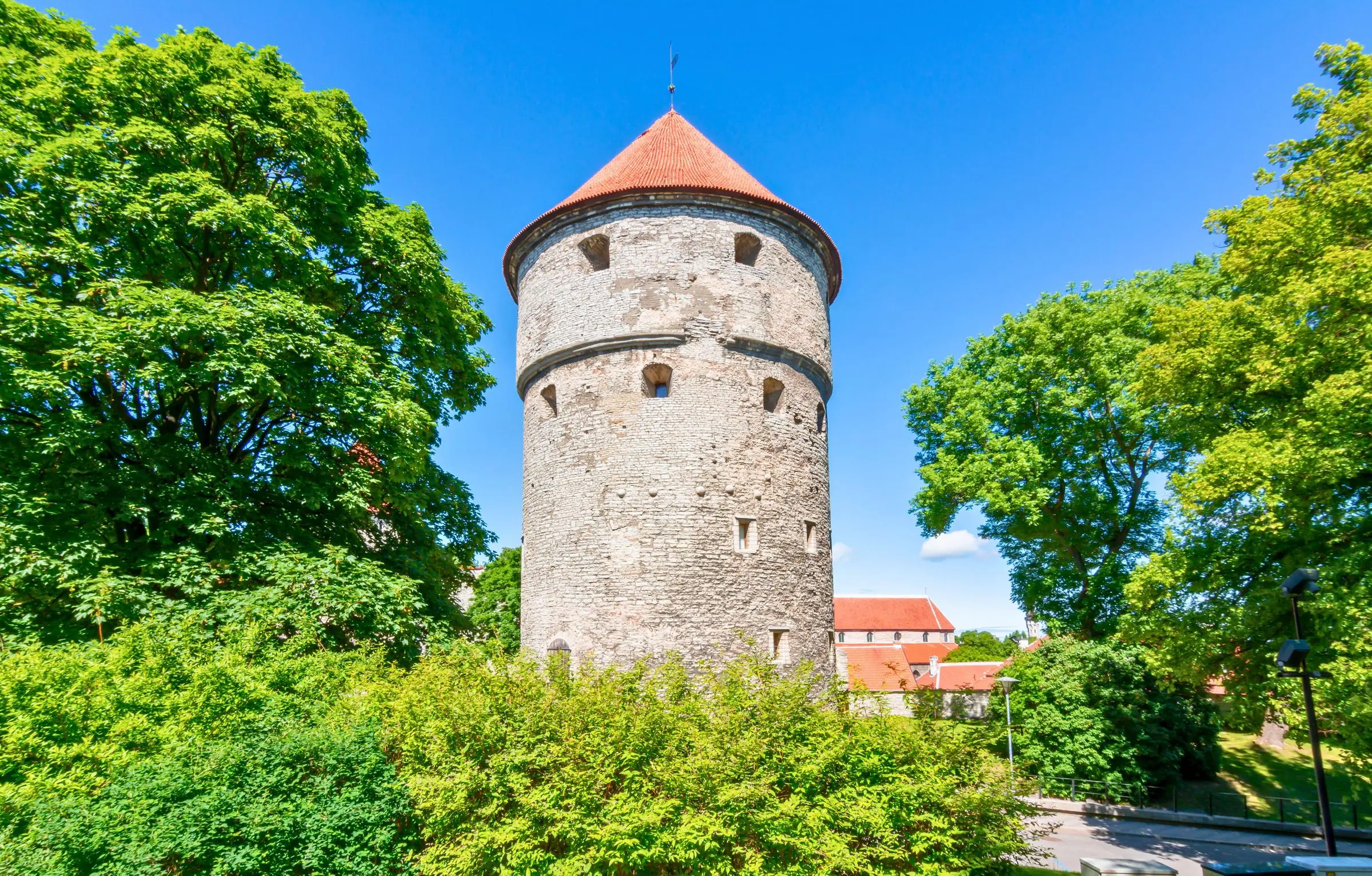
No, the twin foregate towers themselves are not open to the public. They are solid structures that primarily serve as a visual landmark. If you want to go inside a medieval tower, head to the nearby Hellemann Tower or Kiek in de Kök.
Why are they called the Viru Gates?
The name “Viru” comes from Virumaa, a historical county in eastern Estonia. The road passing through these gates historically led eastward toward that region (and eventually toward Russia).
Are the flower market stalls really open 24 hours?
Yes, many of the stalls in the Viru flower market operate 24/7. It is a long-standing Tallinn tradition, ensuring that locals can buy flowers for any occasion, no matter the hour.