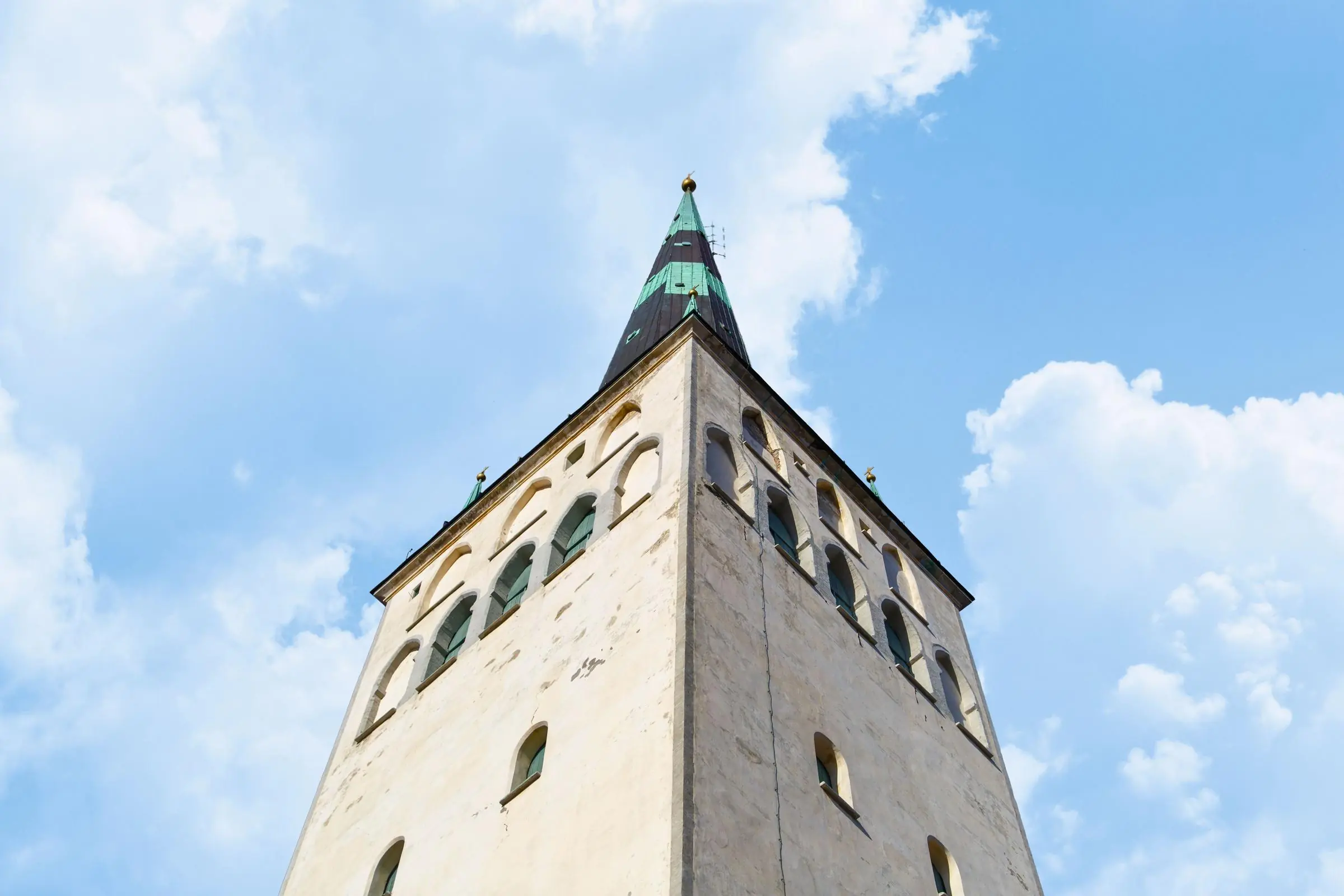
For a brief period in the 16th century, the spire of St. Olaf’s Church (Oleviste kirik) was the tallest building in the world, piercing the sky at a staggering 159 meters. Today, after centuries of fires, lightning strikes, and rebuilds, it stands at a slightly shorter 124 meters. But for visitors to Tallinn, the real story isn’t the height—it’s the climb.
Getting to the outdoor viewing platform requires navigating 232 steep, uneven, and incredibly narrow stone steps. There is no elevator. There is no air conditioning. There is only a thick rope to hold onto and a stone wall pressing in on your shoulders.
This guide breaks down exactly what to expect from the ascent, the specific architectural and historical markers to look for along the way, and the unwritten rules of surviving the stairwell when it gets crowded.
The climb to the St. Olaf’s viewing platform is physically demanding and highly claustrophobic. If you have heart conditions, mobility issues, or severe claustrophobia, you should skip the tower and enjoy the church’s ground-floor interior instead.
Is the Climb Right for You?
Before you commit to the stairs, it helps to know how this attraction fits into different travel styles and limitations.
- For the Time-Poor: If you only have a weekend in Tallinn, the views from St. Olaf’s are unmatched, but the climb can eat up an hour if you get stuck behind a slow-moving crowd. To maximize your time, arrive exactly when the tower opens (usually 10:00 AM) to ensure a clear path up.
- For Families: This is not a climb for toddlers or babies in carriers. The stairs are too narrow to safely maneuver a bulky child carrier, and small children will struggle with the height of the stone steps. Active older kids and teenagers, however, usually treat the climb like an adventure.
- For Budget Travelers: The entry fee for the tower is very affordable (typically around €5). However, if you plan on doing multiple museums and climbs, it is included in the Tallinn Card, which covers public transport and dozens of other attractions.
Should you climb St. Olaf's Spire?
- Offers the highest 360-degree view of the Old Town.
- A genuine, unfiltered medieval architectural experience.
- Excellent photo opportunities of the red rooftops and the Baltic Sea.
- The stairwell is incredibly tight and poorly ventilated.
- Passing people coming the opposite direction is difficult.
- The outdoor platform is narrow and enclosed by wire mesh.
The 5 Landmarks of the Ascent
The climb isn’t just a physical test; it’s a journey through the structural history of the building. Instead of just staring at your feet, keep an eye out for these five specific elements as you make your way up.
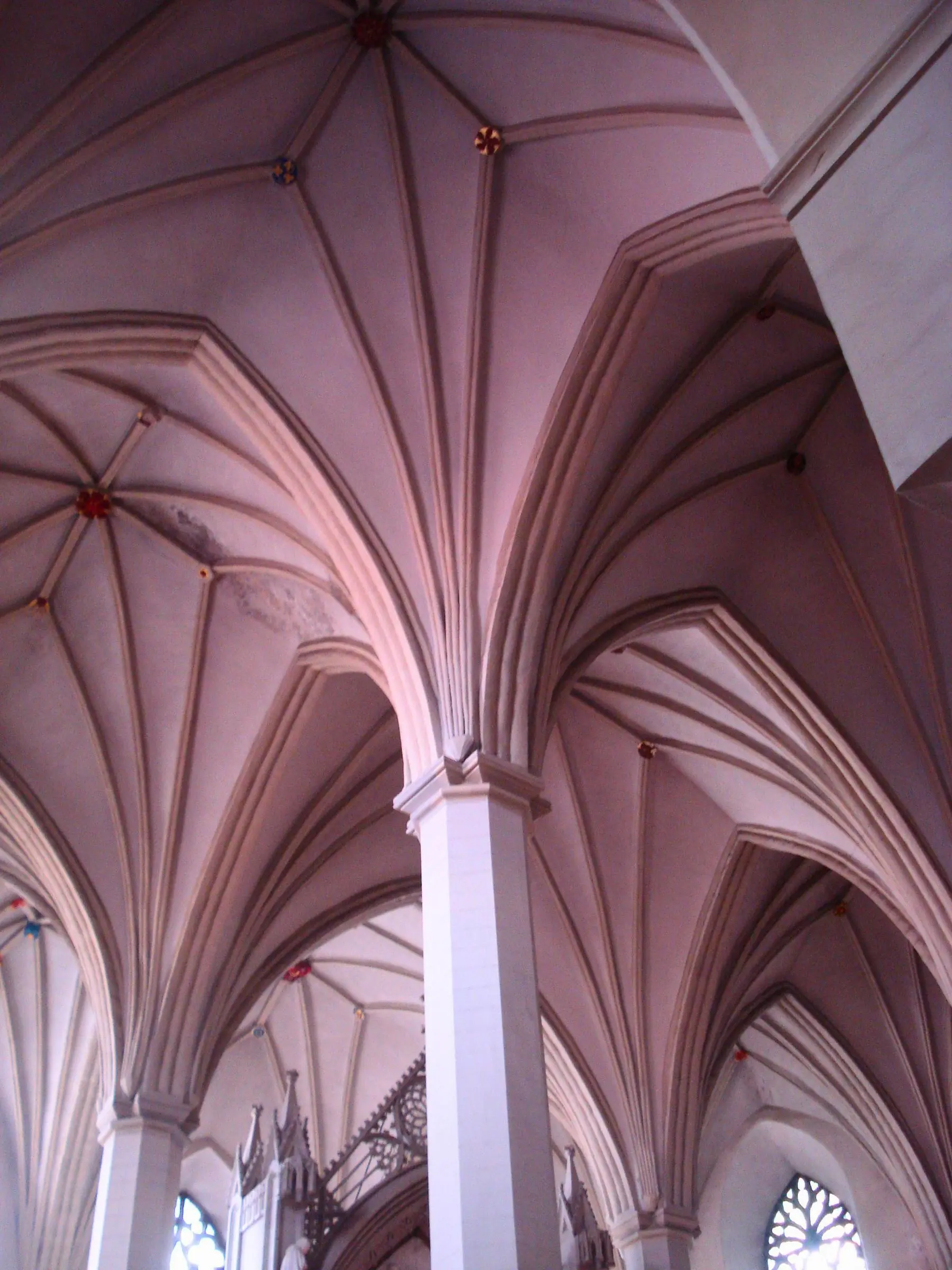
1. The Gothic Vaulted Ceilings
Before you even set foot on the spiral staircase, take a moment in the main nave of the church. St. Olaf’s features stunning Gothic star-vaulted ceilings. The intricate, rib-vaulted masonry was designed to draw the eye upward toward the heavens, a common feature in 15th-century Baltic architecture. Understanding the massive weight of these stone ceilings gives you an appreciation for the thick, load-bearing walls you are about to climb through.
2. The Narrow Barrel Step Layouts
The core of the climb takes place inside a stone barrel stairwell. The steps are wedge-shaped: incredibly narrow near the center pillar and slightly wider near the outer wall.
- The Grip: There is no modern handrail. Instead, a thick, worn rope runs down the center pillar.
- The Wear: Notice the deep dips worn into the stone steps by centuries of footsteps.
- The Strategy: When climbing up, stay close to the rope. When descending, you will be forced to the outer, wider edge of the steps.
3. The Wooden Spire Reinforcement Frameworks
Around two-thirds of the way up, the claustrophobic stone tunnel suddenly opens into the base of the spire’s attic. Here, the environment changes completely. You are no longer surrounded by stone, but by a massive, complex framework of heavy timber beams. This wooden skeleton is what supports the copper-clad spire above. The air here smells distinctly of old wood and dust. Take a moment to catch your breath on the wooden landing and admire the sheer scale of the carpentry required to keep the spire standing against Baltic Sea gales.
4. Historical Lightning Strike Records
Because of its immense height, St. Olaf’s has essentially acted as a giant lightning rod for Tallinn since it was built. The church has been struck by lightning repeatedly and has burned completely to the ground at least three times in its history (most notably in 1625, 1820, and 1931). As you transition from the stone stairs to the wooden upper section, look for informational plaques and historical markers detailing these catastrophic fires. It’s a sobering reminder of how fragile this massive structure actually is.
5. Top-Down Panoramic Photo Vectors
The final push takes you out a small wooden door onto the exterior viewing platform. The platform wraps entirely around the base of the spire. It is very narrow, pitched slightly downward, and enclosed by a heavy wire mesh for safety.
To get the best photos through the mesh, you need to know where to point your camera:
- Southwest Vector: Look toward Toompea Hill. You’ll see the distinct onion domes of the Alexander Nevsky Cathedral and the upper town’s defensive walls.
- Southeast Vector: This offers the classic view over the red-tiled roofs of the Old Town, leading down toward the modern city center.
- North Vector: Look out over the Baltic Sea. You can clearly see the harbor, passing ferries, and the coastal district of Kalamaja.
Photography Tip: The wire mesh on the viewing platform has gaps large enough to fit a standard smartphone lens through, but DSLR users with wide lenses will struggle to shoot without getting the wire in the frame. Bring a lens with a smaller diameter front element if possible.
Safety Rules and Etiquette on the Stairs
Because the stairwell is a single, two-way channel, human traffic jams are inevitable. Following these rules ensures you don’t become a hazard to yourself or others.
- Leave the Backpacks Behind: Do not attempt to climb with a large backpack. You will get stuck, and you will scrape it against the historic walls. There are usually small lockers or a designated spot to leave bags at the ticket desk.
- Wear Proper Footwear: The stone steps are uneven, smooth, and sometimes slippery. Flip-flops, high heels, or completely flat-soled dress shoes are dangerous here. Wear sneakers with good grip.
- The Passing Dance: When you encounter someone coming the opposite direction, the person descending generally steps to the outer (wider) edge of the stair, pressing their back against the wall. The person climbing up stays tight to the center rope.
- Use the Nooks: Every few dozen steps, there are small window alcoves or slightly wider landings. If you hear a large group coming, step into one of these nooks to let them pass.
- Don’t Rush: If you are behind a slow climber, do not crowd them. Give them space. If you need to stop and breathe, do so at one of the window slits so others can carefully pass you.
Logistics: How to Visit
St. Olaf’s Church is located at the northern end of the Old Town, making it an easy addition to any walking itinerary.
- Address: Lai 50, 10133 Tallinn.
- Getting There: If you are coming from outside the Old Town, take Tram 1 or 2 to the Linnahall stop. From there, it’s a short 5-minute walk through the coastal gate into the walled city. Read our public transport guide for ticketing details.
- Opening Hours: The church interior is generally open year-round, but the tower climb is seasonal. It typically opens from April through October. It is closed in the winter due to ice and high winds. Always check the official website for exact dates before your trip.
- Contextual Tours: To fully understand the history of the church and its place in the Hanseatic League, we highly recommend booking a Medieval Tallinn 2-Hour Old Town Walking Tour. Guides often stop outside St. Olaf’s to explain its history before letting you tackle the climb on your own time.
The Anatomy of the Climb
⏱️ Total: 45 minThe Ground Floor
Purchase your ticket at the desk, leave any large bags, and admire the vaulted ceilings in the nave before heading to the stairwell entrance.
The Stone Spiral
The grueling physical portion. 232 steps of narrow, winding stone. Pace yourself and use the window alcoves to let descending traffic pass.
The Wooden Attic
The stairs transition from stone to wood. Catch your breath on the landing and look at the massive timber framework supporting the spire.
The Viewing Platform
Step outside onto the mesh-enclosed platform. Walk the full 360-degree circuit, take your photos, and mentally prepare for the descent.
Where to Stay Nearby
Staying in the northern part of the Old Town puts you right next to St. Olaf’s, the Fat Margaret tower, and the trendy Kalamaja district just outside the walls. It tends to be slightly quieter at night than the area immediately around Town Hall Square.
Keep Planning: If you enjoy high vantage points but want to skip the stairs, check out our guide to the Kohtuotsa Viewpoint on Toompea Hill, which requires a gentle uphill walk rather than a grueling stair climb.
Frequently Asked Questions
How long does it take to climb St. Olaf's tower?
For a person of average fitness, the climb up takes about 10 to 15 minutes. However, during peak summer months, human traffic jams in the narrow stairwell can double this time. Budget about 45 minutes total for the climb, viewing time, and descent.
Is the St. Olaf's tower open in winter?
No. The viewing platform and the stairs are closed to the public from November through March. The outdoor platform becomes dangerously icy, and the high winds off the Baltic Sea make it unsafe for visitors.
Can I buy tickets for the tower in advance?
Generally, individual tickets for the tower are bought on-site at the desk inside the church. However, if you purchase the Tallinn Card, tower access is included, and you simply show your pass at the desk.
Is there an elevator in St. Olaf's Church?
No. The only way to the top is via the 232 medieval stone steps. If you require an elevator for a high city view, consider visiting the Tallinn TV Tower instead.
What happens if I get a panic attack on the stairs?
Because the stairwell is a single, narrow spiral, turning around immediately can be difficult if there is a line of people behind you. If you feel panicked, push forward to the nearest window alcove (they appear every few dozen steps), step into it, let the people behind you pass, and then carefully begin your descent when the path is clear.